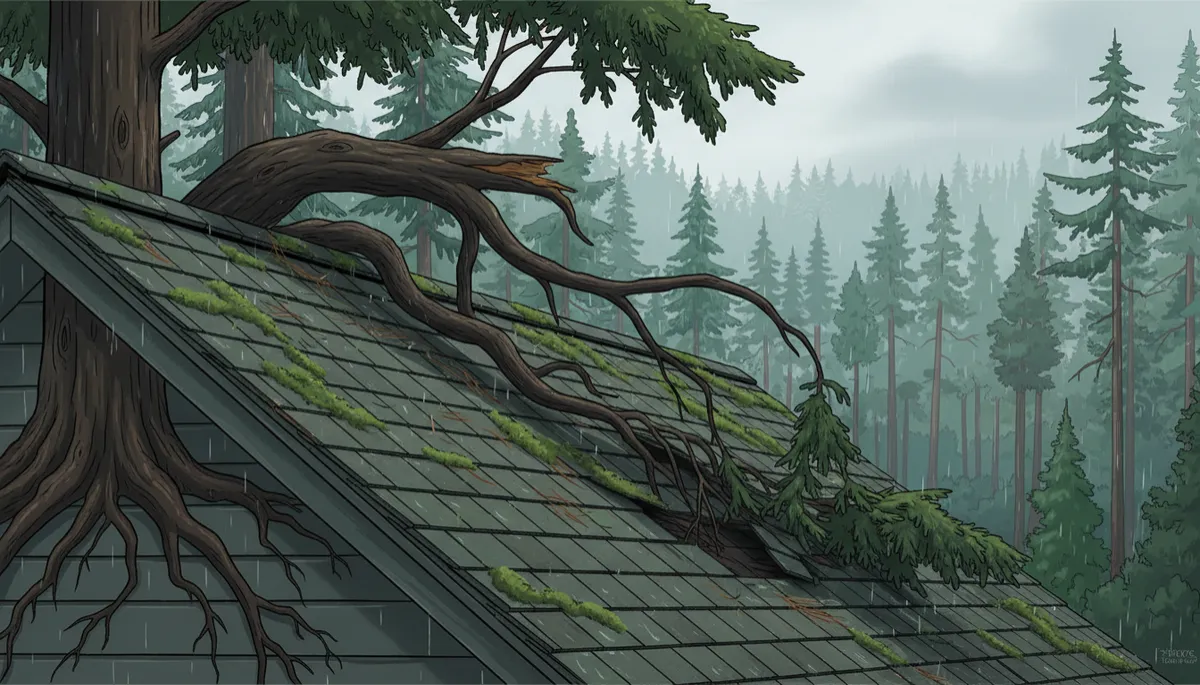
Tree Hazards & Roof Damage in Snohomish County
Roofing, Tree Hazards, Snohomish County
Tree Hazards and Roof Damage in the Forested Pacific Northwest
Living surrounded by towering Douglas firs and western red cedars is one of the great pleasures of life in Snohomish County — but those beautiful trees can pose a serious threat to your roof. Snohomish Roofing Company helps PNW homeowners assess and repair tree-related roof damage. Call (360) 913-2021 or visit https://snohomishroof.com for a FREE roof inspection.
Why Tree Hazards Are Increasing in Snohomish County
Western Washington’s combination of tall trees, saturated soils, and increasingly powerful storms has made tree-related roof damage a growing concern. Recent windstorms in 2025 and 2026 brought gusts over 50 mph to parts of Snohomish County, toppling trees, damaging homes, and causing widespread outages. County hazard-mitigation reports also note that heavier rainfall and flooding are loosening root systems, making even healthy-looking trees more likely to fail during wind events. For homeowners in Snohomish, Everett, Monroe, Lake Stevens, and surrounding communities, proactive tree and roof management is now a critical part of protecting your home investment.
Four Common Types of Tree-Related Roof Damage
1. Direct Impact from Fallen Trees and Large Limbs
The most dramatic and costly damage occurs when an entire tree or major limb strikes the roof. High winds, saturated ground, root rot, or structural defects in the tree can cause sudden failure. Impact damage may include broken trusses, collapsed sections of roof, punctured sheathing, shattered skylights, and compromised load-bearing walls. Even if the roof surface looks mostly intact, hidden structural movement can create long-term safety risks and leaks if not properly evaluated by a qualified roofing contractor and, where needed, a structural engineer.
2. Branch Abrasion and Shingle Wear
Overhanging branches that touch the roof may seem harmless, but constant movement in the wind acts like sandpaper on shingles, metal panels, and ridge caps. Over time, this “branch abrasion” removes protective granules from asphalt shingles, exposes underlying fiberglass mats, and can scratch protective coatings on metal. The result is accelerated aging, premature failure, and a higher risk of leaks during heavy PNW rain. Branches rubbing against gutters and fascia can also loosen fasteners and open gaps where water can infiltrate.
3. Debris Accumulation and Chronic Moisture Problems
Needles, leaves, cones, and small twigs from evergreen and deciduous trees tend to collect in roof valleys, behind chimneys, and in gutters. When this debris stays wet — which is common in our long rainy seasons — it traps moisture against the roof surface and encourages moss, algae, and rot. Clogged gutters can cause water to back up under shingles or overflow against siding and fascia, leading to leaks, peeling paint, and even interior water damage. In freezing weather, trapped water can contribute to ice buildup along eaves, further stressing the roof system.
4. Root Heaving Near the Foundation and Hardscapes
While roots do not directly damage the roof, large trees planted too close to the home can disturb foundations, walkways, and patios as their root systems expand. Root heaving may crack slabs, tilt piers, or distort decks and porches that connect to the building envelope. These shifts can open gaps at roof-to-wall intersections, stress flashing, and alter water-shedding paths, ultimately increasing the likelihood of leaks. In extreme cases, soil movement from roots and saturated ground can contribute to subtle building settlement that affects the roof structure itself.
PNW Tree Species That Pose the Greatest Roof Risk
Many native and ornamental trees can threaten a home under the right conditions, but several Pacific Northwest species are especially important for Snohomish County homeowners to understand. Risk depends on tree health, size, proximity, and site conditions, yet certain species have characteristics that increase the likelihood of roof damage when storms arrive.
Douglas Fir (Pseudotsuga menziesii)
Douglas firs dominate many forested neighborhoods and rural properties in Snohomish County. They can reach well over 150 feet in height, with massive trunks and heavy limbs. When a mature Douglas fir fails — especially in saturated soils or high winds — the resulting impact on a roof can be catastrophic. Root diseases such as laminated root rot may weaken seemingly healthy trees, making professional evaluation critical when large firs are within falling distance of your home, garage, or outbuildings.
Big-Leaf Maple (Acer macrophyllum)
Big-leaf maples often grow along property lines, stream banks, and older homesteads. Their broad crowns and heavy lateral limbs can extend far over roofs, driveways, and power lines. These trees are prone to limb breakage during wind and snow events, particularly if they have internal decay, co-dominant stems, or past topping cuts. In autumn, the large leaves shed by these maples can quickly clog gutters and downspouts, increasing the risk of water damage even when no major limb failures occur.
Red Alder (Alnus rubra)
Red alder is a fast-growing pioneer species common on disturbed sites, stream corridors, and former agricultural land. Although it rarely reaches the height of the largest conifers, alder wood is relatively brittle, and mature trees often develop internal decay. This combination leads to frequent limb drop and whole-tree failure, especially in windstorms and along saturated slopes. Alders that have self-seeded close to homes and sheds should be evaluated early, before they reach sizes that can cause substantial structural damage.
How to Evaluate Tree Hazards Around Your Home
Homeowners do not need to become arborists, but a basic understanding of hazard signs can help you know when to call a professional. Walk your property periodically, especially after storms or long wet periods, and look for:
- Trees leaning suddenly or more than they did previously, particularly toward the house or driveway.
- Cracks or splits in the trunk, especially where large branches or co-dominant stems join.
- Dead or hanging branches (often called “widowmakers”) above roofs, parking areas, or play spaces.
- Fungal growth, cavities, or areas of missing bark at the base of the trunk or major limbs.
- Soil heaving, exposed roots, or gaps forming on one side of the root plate after storms.
If any of these signs are present on a tree that could strike your roof, schedule a hazard assessment with a certified arborist. Snohomish Roofing Company often coordinates with local tree professionals to ensure that both the tree risk and roof condition are evaluated together, giving homeowners a clear plan to reduce danger before the next major wind event.
The Importance of Regular Branch Trimming and Clearance
Proper pruning and branch clearance are among the most effective ways to reduce roof damage without removing healthy trees. In general, branches should be kept at least 10 feet away from the roof surface whenever possible. This clearance helps prevent abrasion, reduces needle and leaf accumulation, and lessens the chance of smaller limbs striking the roof during storms. For conifers, selective thinning can also decrease wind sail and lower the likelihood of whole-tree failure.
Branch trimming should always be performed with tree health and structural integrity in mind. Poor practices such as topping can create long-term hazards, including weakly attached regrowth and decay. Working with an International Society of Arboriculture (ISA) Certified Arborist ensures that pruning follows industry standards, protects tree health, and supports your long-term roof protection strategy. Many homeowners schedule branch trimming in coordination with roof inspections so that any minor shingle or flashing issues discovered after pruning can be addressed promptly.
What to Do Immediately After a Tree Hits Your Roof
When a tree or large limb strikes your roof, your first priority is safety. Do not climb onto the roof or attempt to cut branches yourself, especially during an active storm or around power lines. Instead, take the following steps:
- Evacuate any rooms directly under the damaged area in case of structural instability or falling debris.
- Call 911 if there are downed power lines, active fire, or suspected structural collapse.
- From a safe location on the ground, take photos and short videos of the damage, including the tree, roof, and any interior leaks or cracks you can safely observe.
- Contact Snohomish Roofing Company for an emergency roof assessment and temporary protection measures. Our team is experienced in coordinating with tree services and insurance adjusters during these events.
Avoid delaying that first call. Quick action limits water intrusion, protects belongings, and creates a clear documentation trail for your insurance claim.
Emergency Tarping and Temporary Protection
After a tree impact, exposed areas of your roof must be sealed as quickly as conditions safely allow. Professional emergency tarping involves removing loose debris, securing heavy-duty tarps over damaged sections, and anchoring them to stable parts of the roof structure. In some cases, temporary sheathing or framing may be installed to support the tarp and prevent further collapse. When exterior access is unsafe, limited temporary protection can sometimes be applied from inside the attic to slow water entry until full repairs are possible.
Most homeowners insurance policies in Washington expect you to take reasonable steps to prevent additional damage after a covered event. Prompt emergency tarping not only protects your home but also demonstrates to your insurer that you have fulfilled this obligation. Snohomish Roofing Company provides detailed documentation of emergency measures, including photos and written descriptions, that you can submit as part of your claim file.
Navigating the Insurance Claim Process in Washington State
For most Washington homeowners, damage from a fallen tree caused by wind, storm, or lightning is typically covered under standard homeowners insurance, subject to your deductible and policy limits. While each insurer’s procedures vary, the general steps are consistent:
- Document the damage. Use photos, videos, and written notes to capture the condition of the roof, interior, and tree before cleanup. Keep receipts for emergency services such as tarping or tree removal.
- Review your policy. Confirm your deductible, coverage for dwelling damage, and any provisions for tree removal, additional living expenses, or code upgrades.
- Contact your insurer promptly. Report the loss as soon as it is safe to do so. Provide basic information about the event, date, and type of damage.
- Schedule an adjuster visit. An adjuster may inspect the property in person or use photos and contractor reports. Having a written estimate from Snohomish Roofing Company can help clarify the full scope of necessary repairs.
- Approve repair plans. Work with your contractor and insurer to agree on repair or replacement scope that meets local building codes and manufacturer specifications.
The Washington Office of the Insurance Commissioner provides guidance on understanding your homeowners policy and resolving disputes. Keeping clear records of all communications, estimates, and invoices will support a smoother claim experience. Snohomish Roofing Company regularly assists clients by supplying detailed inspection reports, photographs, and line-item estimates tailored to insurer requirements.
Repair vs. Replacement: Making the Right Decision After Tree Damage
Not every tree impact requires a full roof replacement. The appropriate solution depends on the age of your roof, the extent of structural damage, and how localized the impact area is. In some situations, replacing a defined section of shingles, underlayment, and sheathing is sufficient and cost-effective. However, when a large portion of the roof is affected, or when the existing roof is already nearing the end of its service life, full replacement may be the better long-term investment and may align more closely with manufacturer warranty requirements.
A professional roofing inspection should evaluate not only visible surface damage but also underlying framing, ventilation pathways, and moisture intrusion. Snohomish Roofing Company provides homeowners with clear, written recommendations that outline repair versus replacement options, cost ranges, and potential insurance considerations. Our goal is to help you choose a solution that restores structural integrity, protects against future storms, and fits your budget and long-term plans for the property.
Working with Certified Arborists for Long-Term Tree and Roof Health
Trees are an essential part of the Pacific Northwest landscape, and most homeowners want to preserve them whenever it is safe to do so. Partnering with an ISA Certified Arborist allows you to balance tree health, wildlife value, and shade benefits with the need to protect your roof and home. Arborists can provide hazard assessments, pruning plans, and, when necessary, safe removals of high-risk trees. They also help you select appropriate replacement species and planting locations that reduce future conflicts with structures and utilities.
Snohomish Roofing Company frequently collaborates with trusted local arborists so that roofing and tree decisions support one another. For example, after a major roof replacement, strategic pruning can reduce debris accumulation and prolong the new roof’s life. Likewise, when a hazardous tree must be removed, roofing professionals can inspect and, if needed, reinforce the roof area that previously lay within the tree’s fall zone. This coordinated approach offers Snohomish County homeowners a comprehensive plan for managing both tree hazards and roof performance over time.
Protecting Your Home in a Forested Landscape
Living among Douglas firs, big-leaf maples, red alders, and other Pacific Northwest trees is one of the defining features of life in Snohomish County. With thoughtful planning, regular roof maintenance, and professional tree care, you can enjoy that forested setting while minimizing risk to your home. Annual roof inspections, timely debris removal, strategic branch trimming, and prompt response after storms all work together to protect your investment and keep your family safe.
Do not wait for the next wind advisory or winter storm to discover hidden vulnerabilities. A proactive tree and roof assessment today can prevent costly emergencies tomorrow and extend the life of your roofing system in our demanding climate. Snohomish Roofing Company is committed to helping homeowners throughout the forested Pacific Northwest understand their risks, navigate insurance, and restore their homes after tree-related damage.
Don't let beautiful Pacific Northwest trees become a roofing liability. Snohomish Roofing Company assesses and repairs tree-related roof damage throughout Snohomish County. Call (360) 913-2021 or visit https://snohomishroof.com.