Protect Your PNW Home with Quality Roofing Underlayment
Roofing, Underlayment, Pacific Northwest, Snohomish County
Roofing Underlayment: The Hidden Layer That Protects Your PNW Home
Between your shingles and your roof deck lies one of the most important — and most overlooked — components of your roofing system: the underlayment. In the Pacific Northwest's constant rain, quality underlayment is critical. Snohomish Roofing Company uses premium underlayment on every job. Call (360) 913-2021 or visit https://snohomishroof.com for a FREE roof evaluation today.
What Roofing Underlayment Is — And Why It Matters in the PNW
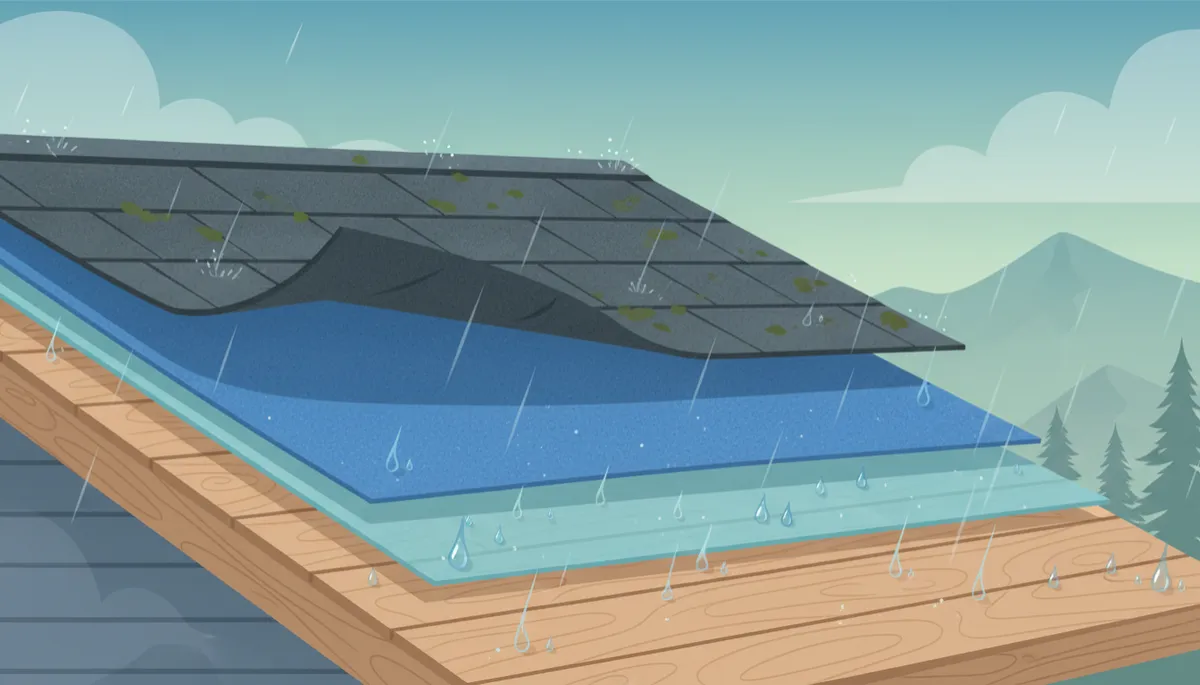
Roofing underlayment is the continuous layer of protective material installed directly on top of your roof deck and beneath your shingles, metal, or other roof covering. Think of it as your roof’s backup defense system. While shingles shed the bulk of the water, underlayment is there to protect the wood deck from any moisture that gets through — whether from wind-driven rain, ice dams, or shingle damage over time. In a climate like Snohomish County, where roofs regularly see months of steady drizzle and heavy storms, that hidden layer is doing a lot of quiet work every single day.
A properly selected and installed underlayment provides several key functions for Pacific Northwest homes:
- Secondary water barrier: If wind lifts shingles, flashing fails, or debris causes damage, underlayment helps keep liquid water off the wood sheathing and out of your attic and walls.
- Temporary roof protection: During re-roofing, underlayment shields the deck from rain between tear-off and shingle installation — especially important here, where “dry days” can be scarce in shoulder seasons.
- Fire and code compliance: Modern underlayments are tested to meet fire and performance standards required by the building code and by shingle manufacturers’ warranties.
- Improved roof life: By reducing repeated wetting of the deck, quality underlayment helps prevent rot, delamination, and premature roof replacement.
Felt Paper vs. Synthetic Underlayment: Pros and Cons for the Pacific Northwest
Traditionally, most homes were built with asphalt-saturated felt paper (often called “tar paper”) as underlayment. Over the last decade, synthetic underlayments made from polypropylene or polyethylene have become the industry standard for high-performance roofing, especially in wet climates like ours. Each material has distinct strengths and weaknesses that matter when you are dealing with months of moisture and occasional windstorms off the Sound.
Asphalt Felt Underlayment: The Old Standard
Felt underlayment is made by saturating a paper or fiberglass mat with asphalt. It is affordable and familiar, which is why it still appears on many budget bids. However, in the Pacific Northwest, its limitations show up quickly:
- Moisture absorption: Felt can absorb water, swell, and wrinkle. In our climate, this can telegraph through to shingles and create uneven surfaces or gaps that allow water intrusion over time.
- Reduced durability: Once wet, felt loses strength and tears more easily under foot traffic or wind uplift, especially on open roofs waiting for shingles during a rainy week.
- Limited UV resistance: Felt degrades quickly when exposed to sunlight. Even a short delay in shingle installation can lead to cracking and loss of protection.
Felt’s main advantage is its lower upfront cost. For a dry, mild climate and a quick installation schedule, it can be serviceable. But for Snohomish County homeowners who expect their roofs to stand up to years of drizzle, felt is rarely the best value in the long run.
Synthetic Underlayment: Designed for Modern Wet-Climate Roofs
Synthetic underlayments are engineered fabrics, typically made of polypropylene or polyethylene, that are mechanically strong, water-resistant, and dimensionally stable. For wet climates, recent industry guidance consistently points to high-quality synthetics as the preferred choice because they do not absorb water, resist tearing, and maintain performance under prolonged moisture exposure and UV light. They are also lighter and come in larger rolls, reducing seams and installation time, which helps control labor costs even when the material itself is more expensive than felt.
- Superior water resistance: Synthetics shed water instead of soaking it up, so they do not wrinkle or become spongy when wet — a critical advantage in the Pacific Northwest’s long rainy stretches.
- High tear strength: Their woven or scrim-reinforced construction resists tearing in high winds and under foot traffic, making them safer for installers and more reliable for homeowners.
- Extended UV exposure ratings: Many synthetic products are rated for 90–180 days of UV exposure, offering peace of mind if weather or scheduling delays shingle installation.
The primary trade-off with synthetic underlayment is cost; it is a premium product compared to basic felt. However, when you factor in fewer repairs, better deck protection, and longer roof life, the lifecycle cost is often lower, especially in a wet region like Snohomish County where moisture-related failures are common with cheaper materials.
Ice and Water Shield: Where It Is Needed in Western Washington
Ice and water shield is a self-adhering rubberized asphalt membrane that forms a fully waterproof barrier and seals around nail penetrations. Building codes typically require it in colder regions where average January temperatures are 25°F or below, to combat ice dams along eaves. Western Washington’s coastal and lowland areas, including most of Snohomish County, are milder and generally fall outside that strict “ice barrier required” zone under the 2021 International Residential Code as adopted by Washington State. That means an ice barrier is not universally mandated at all eaves in our area the way it is in colder states or higher-altitude regions.
However, code minimums are not the same as best practice. Even where not strictly required, Snohomish Roofing Company often recommends and installs ice and water shield in high-risk locations, including:
- Roof valleys where large volumes of water concentrate and flow during heavy rain.
- Low-slope sections (between 2:12 and 4:12) that shed water more slowly and are more vulnerable to wind-driven rain and standing water.
- Around penetrations such as skylights, chimneys, vents, and along sidewalls where flashing intersections are critical.
Using ice and water shield strategically in these areas provides an extra layer of protection against leaks caused by heavy rain, wind-driven water, or localized ice buildup during cold snaps, even though our regional code may not demand full eave-to-wall coverage on every home.
How Underlayment Fails Over Time in Wet Climates
Underlayment does not last forever. In the Pacific Northwest, where roofs endure constant cycles of wetting and drying, the wrong underlayment can deteriorate far sooner than homeowners realize. Common failure modes include:
- Moisture saturation and rot: Felt that repeatedly absorbs water can break down, lose thickness, and eventually disintegrate. When that happens, the roof deck beneath is left exposed to moisture, leading to rot, mold growth, and costly sheathing replacement during the next re-roof.
- Wrinkling and buckling: Swollen underlayment can cause bumps under shingles that trap water, accelerate shingle wear, and create channels where water can run sideways into nail holes or seams.
- UV and heat degradation: If a roof is left uncovered or shingles blow off in a storm, lower-grade underlayments can crack or become brittle under UV exposure and attic heat, losing their ability to act as a watertight barrier.
Even synthetic underlayments can fail prematurely if they are extremely thin, installed incorrectly, or combined with poor attic ventilation that allows excessive heat and moisture buildup below. This is why material selection, proper fastening, correct overlaps, and a well-ventilated roof assembly all matter in our region’s damp, cool-to-mild marine climate.
Why Cheap Underlayment Costs More in the Long Run
Underlayment is often invisible to homeowners once the shingles are on, which makes it an easy target for cost-cutting. Some low bids rely on the thinnest felt or bargain synthetic products to shave dollars off the material list. On paper, the savings may look appealing. In reality, the long-term costs can be significant for Snohomish County homeowners:
- If cheap underlayment fails, water can damage your roof deck, insulation, drywall, and personal belongings, leading to thousands of dollars in repairs that far exceed the small upfront savings.
- Inferior products may void or limit manufacturer shingle warranties, leaving you without coverage if problems arise.
- During reroofing, contractors may discover widespread deck damage hidden under aging underlayment, increasing tear-off and replacement costs.
In a wet climate, underlayment is not the place to cut corners. A modest investment in premium materials and professional installation pays off through longer roof life, fewer leaks, and better protection for your home and family. Snohomish Roofing Company builds this philosophy into every proposal by specifying products designed for our region, not just for the lowest possible bid price.
Building Code Requirements for Underlayment in Snohomish County
As of March 15, 2024, Snohomish County enforces the 2021 International Residential Code and International Building Code as adopted by Washington State. For typical single-family homes, the 2021 IRC Section R905 governs roofing underlayment. In simple terms, the code requires:
- Underlayment on all roofs: Every roof covering — asphalt shingles, metal, tile, slate, wood, and more — must be installed over code-compliant underlayment that meets specific ASTM performance standards and is labeled accordingly.
- One or two layers based on slope: Roofs with a slope of 4:12 or steeper generally require at least one layer of underlayment. Low-slope roofs between 2:12 and 4:12 require either two layers of overlapping underlayment or a single layer of self-adhering modified bitumen, because water drains more slowly and risk is higher.
- Proper overlaps and fastening: The code and manufacturer instructions specify minimum overlaps, end-lap staggering, and fastening patterns to ensure a continuous, reliable barrier. Inspectors will look for these details during roofing inspections.
While Snohomish County may not add many local amendments to the statewide underlayment rules, compliance still requires attention to slope calculations, product labeling, and installation details. Snohomish Roofing Company stays current with these requirements so your new roof not only performs in our climate but also passes inspection and meets manufacturer warranty conditions.
What Snohomish Roofing Company Specifies for PNW Homes
For homeowners in Snohomish County and across the Pacific Northwest, Snohomish Roofing Company specifies a system approach to underlayment rather than a one-size-fits-all product. Our typical asphalt shingle roof package includes:
- High-quality synthetic underlayment across the main field of the roof for superior water resistance, tear strength, and UV durability, particularly valuable when weather delays occur during installation.
- Self-adhering ice and water shield in valleys, along critical eaves and low-slope transitions, and around penetrations such as skylights and chimneys, even where not strictly required by code, to provide belt-and-suspenders protection against leaks.
- Code-compliant installation patterns with appropriate overlaps, end-lap staggering, and fasteners that meet or exceed manufacturer specifications for our wind and rain conditions.
We also evaluate each home individually. Complex rooflines, shaded north-facing valleys, or homes near the water may justify additional ice and water shield coverage or upgraded underlayment products. Our goal is not just to meet the minimum code requirement but to design a roof system that performs reliably for decades in the Pacific Northwest’s unique mix of rain, wind, and occasional snow — all while protecting your investment in your home.
Protect Your Snohomish County Home with the Right Hidden Layer
Underlayment is not the most visible part of your roof, but in the Pacific Northwest it is one of the most important. Choosing the right materials — and the right contractor — can mean the difference between a roof that simply looks good on day one and a roof that quietly protects your home, season after rainy season. When it comes to your roof, what you can't see matters just as much as what you can. Snohomish Roofing Company installs the right underlayment for our wet Pacific Northwest climate. Call (360) 913-2021 or visit https://snohomishroof.com.