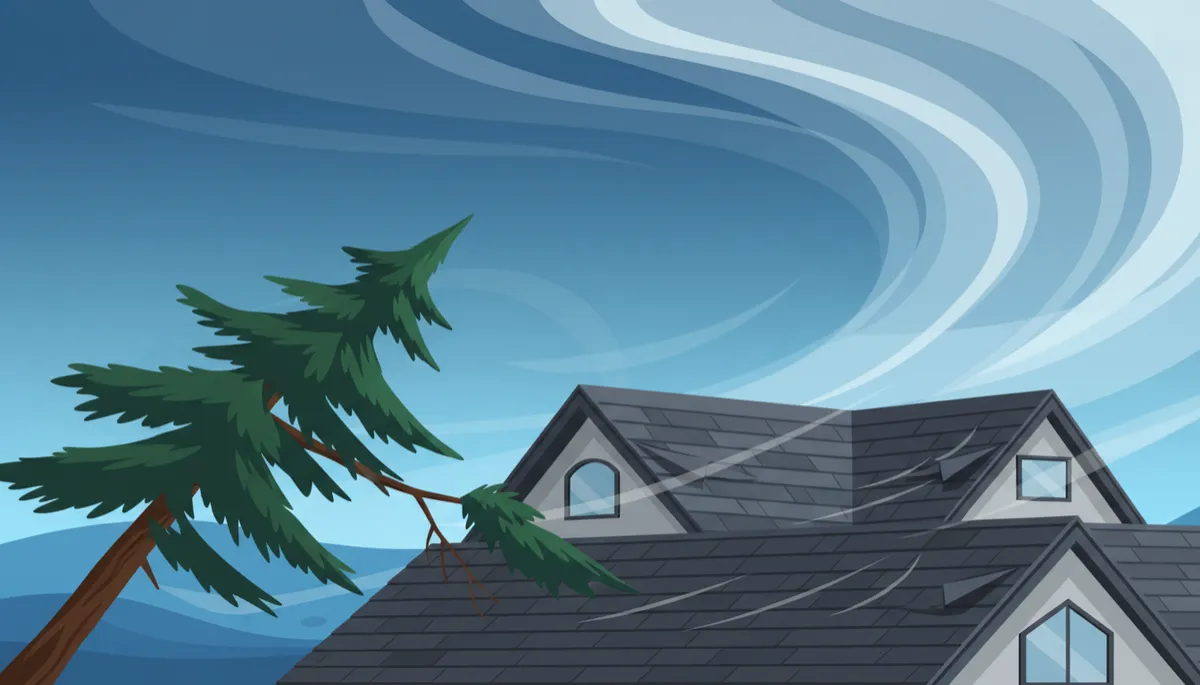
Prevent Wind Damage to Roofs in Washington State
Roofing, Wind Damage Prevention, Washington State
Preventing Wind Storm Roof Damage in Washington State
Washington State windstorms can rip shingles off your roof in minutes — and the damage often isn't fully visible until you're dealing with a leak. Snohomish Roofing Company helps Snohomish County homeowners prepare before storms hit and recover fast when they do. Call (360) 913-2021 or visit https://snohomishroof.com for a FREE pre-storm roof inspection.
How Strong Are Puget Sound Windstorms?
Around Puget Sound, including Snohomish County, everyday winds are usually modest, often in the 5–10 mph range. The real concern for your roof is not the average day, but the powerful winter windstorms that roll in from the Pacific. Data from Washington State hazard profiles and the Office of the Washington State Climatologist show that minor storms with peak gusts around 39–44 mph occur several times each year, while moderate storms with sustained winds in the 45–54 mph range tend to hit about once a year. Major storms with sustained winds of roughly 55–64 mph arrive every 20–30 years, and extreme events with 65–74 mph winds are possible every few decades. Historic storms, like the 1962 Columbus Day Storm, brought sustained winds near 76 mph to parts of the region. Even if those once-in-a-generation events are rare, the yearly pattern of moderate storms is more than enough to loosen shingles, stress flashing, and expose weak spots in a roof that is not properly installed or maintained.
The Most Vulnerable Areas of Your Roof in High Winds
Wind does not hit your roof evenly. Certain areas experience much higher uplift pressures than the wide, flat field of shingles. Understanding these weak points helps you see why targeted inspection and reinforcement are so important for Snohomish County homes, especially those on ridgelines, bluffs, or open exposures near the water or farmland.
- Ridge: The ridge is the highest point where two roof planes meet. Wind streaming over the top can create a low-pressure zone that tries to lift ridge caps. Poorly fastened ridge shingles, or caps installed without proper overlapping, are often the first pieces to go in a storm, opening a direct path for water intrusion along the roof peak.
- Hip ends: On hip roofs, the sloping corners concentrate wind pressure. Hip caps that are under-nailed or misaligned can peel back, allowing wind-driven rain to penetrate under adjacent courses of shingles and into the underlayment and decking below.
- Eaves: Eaves are particularly vulnerable because wind can get under the shingle edges and create uplift. If starter strips are missing or installed incorrectly, the first course of shingles can be pried upward, often tearing off multiple rows and exposing bare wood to rain in a single event.
- Gable ends: Gable roofs have vertical end walls that catch the wind like a sail. High gusts can flex the gable overhang, loosen fascia and soffits, and then begin stripping shingles from the edge inward. If the underlying framing is weak or the sheathing is thin, structural damage can follow repeated wind events.
Wind Uplift Ratings and What They Mean for Your Roof
Modern roofing materials are tested and rated for wind uplift using national standards. For asphalt shingles, common in Washington State, tests such as ASTM D3161 and ASTM D7158 assign wind resistance classes. Many architectural shingles installed today are rated for 110–130 mph winds, and some premium products are tested up to 150 mph when installed exactly as specified. In contrast, older three-tab shingles, which are still found on many Snohomish County homes, often carry ratings of only 60–70 mph when new. As those shingles age, their practical wind resistance can drop well below that level. While Puget Sound does not see hurricane-force design winds like Florida, storms with gusts in the 45–60 mph range are common enough that choosing shingles with higher wind ratings, and ensuring they are installed to meet those ratings, is a smart investment. The rating on the bundle, however, is only valid if the contractor follows the manufacturer’s fastening and layout instructions precisely.
Why Nailing Patterns and Starter Strips Matter So Much
In windstorms, your roof fails at its weakest connection. Even the best shingle cannot perform if it is not fastened correctly. Manufacturers typically specify a four-nail pattern for standard conditions and a six-nail pattern for higher wind zones. Using only four nails where six are required can void the wind rating and significantly reduce resistance to uplift. Nails must also be placed in the correct zone on the shingle, penetrating both the shingle and the underlying course to lock them together. High or angled nails can cut through the mat or miss the double layer, allowing tabs to lift and tear in gusts. Starter strips along eaves and rake edges are equally critical. A proper starter course uses shingles or dedicated starter products with factory-applied adhesive at the correct distance from the edge, creating a strong seal. Improvised starter rows, such as flipping standard shingles without aligning the sealant strip properly, leave the first visible course vulnerable to being peeled back by wind entering from below, especially along eaves and gable ends where uplift is highest.
How Aging Shingles Fail in Washington Windstorms
Over time, our wet winters, summer sun, and frequent temperature swings cause shingles to lose flexibility and adhesion. The asphalt dries out, granules wash into gutters, and the factory sealant strips that once bonded courses together become brittle or contaminated with debris. As a result, older roofs may have many tabs that are no longer fully sealed. In a 40–50 mph wind, these loose tabs can flutter, crack along the nail line, or tear off entirely. Once a few shingles are missing, the wind can catch the exposed edges of surrounding shingles and create a chain reaction of damage. Aging three-tab shingles are particularly prone to this kind of failure because they are lighter and have more cutouts, giving wind more edges to grab. Even architectural shingles with higher original wind ratings will gradually lose some uplift resistance as adhesives age. This is why a 15–20-year-old roof in Snohomish County may be structurally intact but still highly vulnerable to wind damage, especially at ridges, hips, and edges that have seen repeated storms.
Overhanging Trees: A Hidden Wind Hazard Above Your Roof
Western Washington’s evergreens and large deciduous trees add beauty and shade, but they also introduce serious risk during windstorms. Branches that hang over your roof can break under wind stress or when saturated soils loosen tree roots. Even smaller limbs can puncture shingles, crack decking, or damage ridge vents and gutters. Constant brushing from branches in lighter winds also scours granules off the shingle surface, accelerating aging in those contact areas. In a major storm, a falling tree can cause catastrophic structural damage that far exceeds typical shingle loss. Homeowners in Snohomish County should periodically assess tree health, especially tall firs and maples close to the house. Trimming back overhanging limbs, removing dead or diseased trees, and consulting an arborist when necessary reduces both impact risk and the amount of debris that lands on the roof and in gutters after every storm. A clean, unobstructed roof surface sheds wind and water more effectively than one cluttered with branches and leaves.
Post-Storm Roof Inspection Steps for Washington Homeowners
After a windstorm, it is important to check your roof systematically, but safely. Wait until the storm has fully passed, and avoid climbing onto a wet or icy roof. Start with a visual inspection from the ground, using binoculars if possible. Look for missing or curled shingles, exposed underlayment, damaged ridge caps, and debris piles. Then move indoors and inspect ceilings, walls, and the attic for new water stains, damp insulation, or musty odors that can indicate hidden leaks. Next, examine gutters and downspouts for an unusual buildup of shingle granules, which may signal accelerated wear from wind and rain. If it is safe to access the roof, check high-risk areas closely: ridges, hips, eaves, and gable ends, as well as flashing around chimneys, skylights, and vent pipes. Remove small debris to keep drainage paths clear, but do not attempt repairs you are not comfortable with. Document any visible damage with photos and notes. Finally, contact a qualified local roofer such as Snohomish Roofing Company for a professional inspection, especially if you suspect structural issues, loose flashing, or widespread shingle loss. A trained eye can often spot problems that are easy to miss from the ground or without roofing experience.
Emergency Tarping to Protect Your Home After Damage
When wind has torn off shingles or exposed roof decking, the priority is preventing further water intrusion until permanent repairs can be made. Emergency tarping is a temporary but essential step. Proper tarping involves more than simply throwing a sheet of plastic over the damaged area. The tarp should extend well beyond the visible damage, be anchored securely into sound framing or sheathing, and be installed so that water sheds downhill without pooling. In many cases, this requires removing loose debris, installing temporary battens, and carefully fastening the tarp in a way that does not create additional leaks. Because working on a storm-damaged roof is hazardous, especially in wet and windy conditions, homeowners are strongly advised to let professionals handle tarping whenever possible. Snohomish Roofing Company can respond quickly after a storm to stabilize your roof, minimizing interior damage to insulation, drywall, and personal belongings while you coordinate permanent repairs and any necessary insurance claims.
Filing an Insurance Claim for Wind Damage in Washington State
Most homeowner’s insurance policies in Washington State cover sudden and accidental wind damage, but the process works best when you act promptly and document thoroughly. After a storm, review your policy to understand your deductible, exclusions, and any specific requirements related to roof age or maintenance. Take clear photos of all visible damage, both outside and inside, and keep notes on when the storm occurred and what you observed. Contact your insurer as soon as practical to report the loss. In many cases, the insurance company will send an adjuster to assess the roof. Having a trusted local roofing contractor provide an independent inspection and written estimate can help ensure that all necessary repairs are identified. Contractors experienced with Washington claims can also highlight code-related upgrades that may be required, such as improved nailing patterns or underlayment, so that the scope of work meets current standards. While insurers generally do not pay for normal wear and tear, clear storm-related damage, such as missing shingles, torn flashing, or punctures from fallen branches, is typically eligible, provided the roof was in reasonable condition before the event.
Why Proactive Roof Inspections Prevent Major Wind Damage
The most cost-effective way to protect your Snohomish County home from windstorms is to identify weaknesses before the next storm season. A proactive roof inspection looks for unsealed shingle tabs, exposed nail heads, deteriorated sealant at flashing, soft spots in decking, and signs of aging such as heavy granule loss or cracking. Addressing these issues early—whether through targeted repairs, replacing brittle ridge caps, improving attic ventilation, or planning a full reroof—greatly reduces the likelihood of sudden, large-scale failure in a wind event. Regular inspections also help you track the remaining service life of your roof so you can budget for replacement, rather than being forced into an emergency project after a major leak. For Washington homeowners, where moderate windstorms with 45–50 mph gusts are a yearly occurrence, investing in a pre-storm inspection is similar to servicing your furnace before winter: it is a practical step that keeps your home safer and reduces long-term costs. Snohomish Roofing Company offers detailed, professional inspections tailored to local conditions, helping you prioritize repairs and choose materials with appropriate wind uplift ratings for our region.
Don't wait for a windstorm to find out your roof has weak spots. Snohomish Roofing Company provides pre-storm inspections and rapid storm repair throughout Snohomish County. Call (360) 913-2021 or visit https://snohomishroof.com.