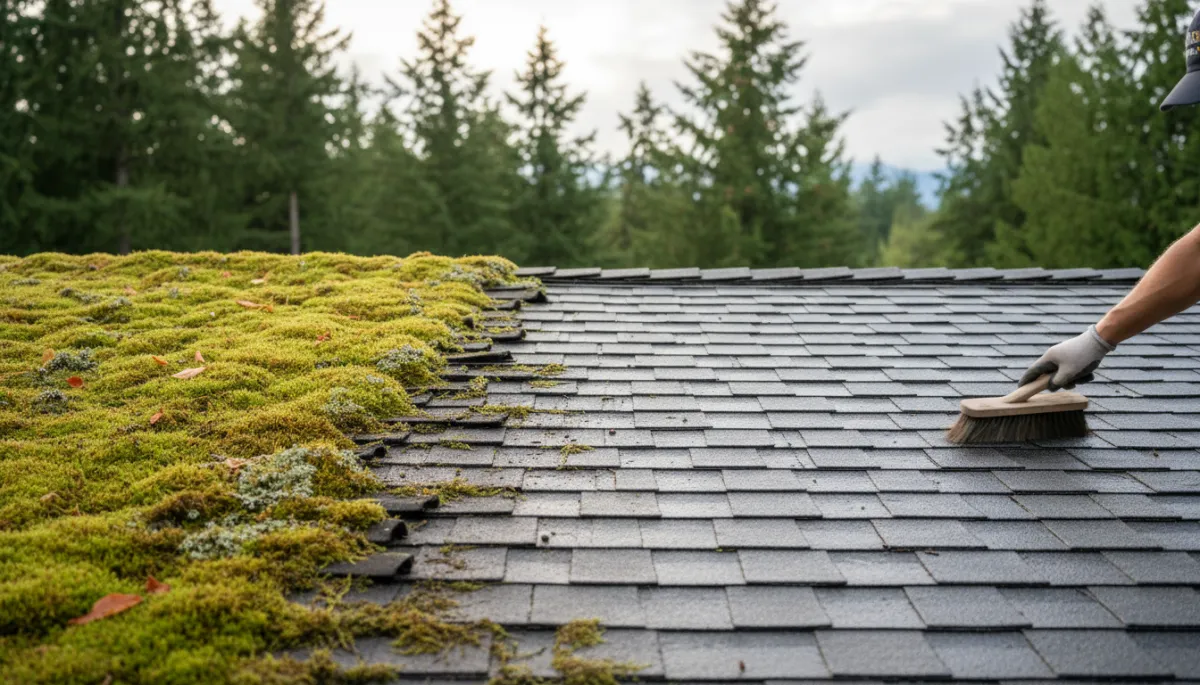
Moss Removal Guide for Snohomish County Roofs
Roofing, Moss Removal, Snohomish County
Moss and Lichen Removal: A Complete Guide for Snohomish County Homeowners
Is moss taking over your roof? Snohomish Roofing Company specializes in safe, effective moss and lichen removal for homes throughout Snohomish County and the greater Puget Sound area. Call us today at (360) 913-2021 or visit https://snohomishroof.com to schedule your FREE roof inspection.
If you own a home in Snohomish, Everett, Monroe, Lake Stevens, or anywhere in the Puget Sound region, you have likely battled moss and lichen on your roof. Our cool, wet climate is ideal for lush green landscapes, but it is equally inviting for the organisms that quietly eat away at roofing systems. Left untreated, moss and lichen can shorten the life of your roof by years, lead to leaks, and compromise your home’s structure and indoor air quality. This guide explains why growth is so aggressive here, how it damages your roof, and what Snohomish County homeowners can do to remove and prevent it safely and effectively.
Why Moss and Lichen Thrive in the Pacific Northwest Climate
Western Washington’s maritime climate provides nearly perfect conditions for moss and lichen. Snohomish County receives frequent rainfall, long periods of overcast skies, and relatively mild temperatures year-round. Moss and lichen thrive where there is consistent moisture, shade, and a rough surface to anchor to. Asphalt shingles, wood shakes, and even some composite materials provide exactly that environment when they remain damp for extended periods.
Many Snohomish County homes are surrounded by tall evergreens and dense landscaping that cast shade across roof surfaces for much of the day. North-facing roof slopes, valleys, and areas beneath overhanging branches stay cooler and wetter, allowing moss and lichen spores carried by wind, birds, and rain to take hold easily. Once established, these organisms retain even more moisture, accelerating their own spread and creating a cycle that is difficult to break without targeted treatment and ongoing maintenance.
How Moss and Lichen Damage Shingles and Underlayment
At first glance, a light green fuzz on your shingles may look harmless or even charming. In reality, moss and lichen are highly destructive to roofing materials. Moss sends tiny root-like structures into the surface of shingles and between shingle courses. As it grows, it lifts shingles, breaks down protective granules, and creates pockets where water can pool instead of shedding cleanly into your gutters. In winter, trapped water can freeze and expand, prying shingles up further and opening pathways for leaks.
Lichen, which is a combination of algae and fungi, forms crusty or leafy patches that adhere tightly to shingle surfaces. Over time, lichen can pit and etch the protective coating on asphalt shingles, speeding up granular loss and UV degradation. As granules wash away, shingles become brittle and less able to protect the underlayment. Prolonged moisture beneath lifted or damaged shingles can rot the roof deck, compromise fasteners, and eventually lead to interior water damage, mold growth, and insulation problems. What begins as a cosmetic issue can turn into a full roof replacement years earlier than necessary if it is not addressed promptly and correctly.
Safe Moss and Lichen Removal vs. Dangerous Pressure Washing
One of the most important decisions homeowners face is how to remove existing moss and lichen. High-pressure washing may seem like a quick solution, but it is one of the most damaging methods you can use on an asphalt shingle roof. Powerful pressure washers can strip away protective granules, tear shingles, drive water under the roofing, and void manufacturer warranties. Even on metal or tile roofs, improper pressure or nozzle choice can cause leaks and surface damage that are costly to repair.
A safer and more effective approach combines low-pressure “soft washing” with targeted treatments. Professional soft washing systems use controlled, low-pressure water flow along with specially formulated cleaning solutions designed to kill moss, lichen, algae, and mildew at the root level without physically blasting the roof surface. Once the growth is dead, it can be gently brushed or rinsed away, or allowed to weather off naturally over time, depending on roof condition and pitch. This method preserves shingle integrity, protects flashing and sealants, and dramatically reduces the risk of immediate regrowth compared to simply scraping or washing the surface.
Zinc and Copper Treatments for Long-Term Moss Prevention
Killing and removing existing moss is only part of the solution. In Snohomish County’s climate, prevention is critical if you want your roof to stay clean for more than one season. One of the most reliable preventive strategies is the use of zinc or copper, both of which naturally inhibit moss and algae growth. When installed correctly near the ridge of your roof, zinc or copper strips slowly release ions each time it rains. These ions wash down over the shingles, creating an environment where new spores struggle to establish themselves.
In addition to physical strips, some treatments use zinc sulfate or similar compounds in granular or liquid form. Applied according to label directions, these products can kill existing moss and provide a measure of ongoing protection. However, they must be used carefully to avoid staining nearby surfaces and to protect landscaping and drainage systems. Professional roofing contractors familiar with Snohomish County conditions can recommend appropriate zinc or copper solutions and ensure they are installed or applied in a manner that balances effectiveness, roof warranty requirements, and environmental considerations.
When DIY Moss Removal Is Appropriate & When to Call a Professional
Many homeowners in the Puget Sound area are comfortable with basic home maintenance and may be tempted to handle moss removal themselves. In some cases, limited DIY work can be appropriate. For example, on a relatively low, gently sloped roof with minor moss growth, a homeowner might safely use a ladder, a roof harness, and a soft-bristled brush or broom to loosen dry, dead moss, combined with an over-the-counter moss control product approved for their roofing material. It is essential to follow all safety guidelines, avoid walking on wet or steep surfaces, and never use metal scrapers or harsh tools that can gouge shingles or flashing.
However, there are clear situations where calling a professional like Snohomish Roofing Company is the safer and more cost-effective choice. If your roof is steep, multi-story, or has extensive moss and lichen coverage, professional equipment and fall protection are vital. If you are unsure of your roof’s condition, a trained eye can distinguish between cosmetic growth and underlying damage that may require repair. Additionally, professionals have access to commercial-grade soft washing systems and treatments that are more effective and longer lasting than most consumer products, and they understand how to work within manufacturer guidelines to preserve your roof warranty. For many homeowners, a professional moss removal and treatment service every few years is a small investment compared to the cost of premature roof replacement or water damage remediation.
Best Seasonal Timing for Moss Treatment in Western Washington
In Western Washington, timing your moss treatment correctly can improve results and extend how long your roof stays clean. Moss and lichen are most active during our cool, moist seasons, particularly in fall and early spring. These periods provide enough moisture for treatments to work effectively while still offering windows of dry weather for safe application. Many experts recommend scheduling roof moss control in late winter to early spring, before the heaviest spring growth begins, or again in early fall, before the wettest months set in. Choosing a stretch of weather with at least 24 hours of minimal rainfall allows cleaning solutions to remain on the roof long enough to fully penetrate and kill the growth.
Seasonal timing is also important from a safety and maintenance standpoint. In winter, icy surfaces and storms make roof work hazardous. In midsummer, shingles can become extremely hot and more susceptible to damage from foot traffic. By planning moss removal and preventive treatments for shoulder seasons, Snohomish County homeowners can take advantage of milder temperatures, safer conditions, and optimal product performance. A professional roofing contractor can help you build a maintenance schedule that aligns with these seasonal patterns and with the specific exposure and shading of your property.
Practical Prevention Tips for Snohomish County Roofs
Alongside zinc or copper treatments, a few practical steps can significantly slow moss and lichen growth on your roof. Regular gutter cleaning keeps water moving off the roof edge instead of backing up and soaking the lower courses of shingles. Trimming back overhanging branches can increase sunlight and airflow, allowing the roof surface to dry more quickly after rain. Keeping debris such as needles and leaves off the roof reduces the organic material moss uses as a base. Ensuring proper attic ventilation and insulation helps minimize condensation from inside the home, which can otherwise contribute to moisture problems on the underside of the roof deck and shorten the life of the roofing system as a whole.
Establishing a routine inspection schedule is equally important. A professional roof inspection every one to two years allows small patches of moss or lichen to be identified and treated before they spread. This is especially valuable for shaded north slopes and valley areas that you may not see easily from the ground. In many cases, early intervention involves minimal cost and disruption, while waiting until growth is obvious from the street often means the organisms have already been at work for several seasons.
Protecting Your Investment with Professional Moss and Lichen Care
Your roof is one of the largest investments you will make in your home, and in Snohomish County’s climate, proactive moss and lichen management is essential to protecting that investment. By understanding why growth is so prevalent here, recognizing the damage it can cause, and choosing safe, proven removal and prevention methods, you can add years to the life of your roof and reduce the risk of costly water damage. Whether you opt for limited DIY maintenance or prefer to rely on professional services, the key is consistency: regular inspections, timely treatments, and preventive measures tailored to our unique Pacific Northwest environment.
Snohomish Roofing Company works with homeowners throughout Snohomish County and the greater Puget Sound area to develop customized moss and lichen control plans that respect your roof type, neighborhood setting, and budget. From gentle soft washing and careful hand removal to zinc and copper-based prevention strategies, our team focuses on safe, effective methods that protect both your home and the surrounding landscape. If you are seeing green patches, curled shingles, or debris buildup on your roof, now is the time to act rather than waiting for the problem to worsen through another rainy season.
Don't let moss rob your roof of years of life. Snohomish Roofing Company offers professional moss removal, treatment, and prevention services across Snohomish County. Call (360) 913-2021 or visit https://snohomishroof.com to get started with a free inspection today.