Gutters & Drainage for Rainy Pacific Northwest Homes
Roofing, Gutters, Drainage, Snohomish County
Gutters and Drainage: Essential Systems for Rainy Pacific Northwest Homes
Your gutters are your roof's first line of defense against the Pacific Northwest's relentless rain — and Snohomish Roofing Company can make sure they're up to the job. Call (360) 913-2021 or visit https://snohomishroof.com to schedule a FREE gutter and roof inspection today.
In the Puget Sound region and across Snohomish County, rain is a way of life. Months of steady drizzle, sudden downpours, and the occasional windstorm put a constant load on your roof and gutter system. When gutters and drainage are properly designed and maintained, water is safely carried away from your home. When they are undersized, clogged, or failing, that same water can quickly turn into roof leaks, fascia rot, foundation issues, and soggy, unusable yards. This article explains why high-performing gutters and drainage systems are so critical in the Pacific Northwest and how Snohomish Roofing Company helps homeowners protect their investment year-round.
Why Gutters Are Critical in the Pacific Northwest Climate
Western Washington receives significant annual rainfall, much of it spread out over long, wet seasons. Roofs in Snohomish County may shed thousands of gallons of water in a single storm. Without effective gutters, that water simply sheets off the roof edge, soaking siding, backing up under shingles, eroding soil, and pooling around foundations and crawlspaces. Over time, this leads to mold growth, wood rot, and costly structural repairs that far exceed the cost of a well-designed gutter system.
The Pacific Northwest also has abundant surrounding vegetation. Moss, leaves, and especially evergreen needles constantly land on roofs and in gutters. When gutters fill with organic debris, they stop flowing and begin to overflow at the exact moment you need them most — during a heavy rain. For Puget Sound homeowners, gutters are not an optional accessory; they are a critical, working part of the roofing system that must be sized, installed, and maintained for the realities of our local weather and tree cover.
Sizing Gutters for Heavy Rainfall: The Case for 6-Inch K-Style
Many older homes in the area were built with 4- or 5-inch gutters, which may have been adequate decades ago but are often undersized for today’s roofing materials, steeper pitches, and increasingly intense rain events. Larger roof surfaces shed more water more quickly, and small gutters can easily become overwhelmed, sending water over the front edge and behind the gutter instead of down the downspouts where it belongs.
A 6-inch K-style gutter offers significantly more capacity than a standard 5-inch system. The “K-style” profile, which has a flat back and a decorative front, is designed to handle high volumes of water while still looking clean and finished on the home. For Snohomish County properties with large roof areas, long roof runs, or valleys that concentrate water into specific sections of gutter, upgrading to 6-inch K-style can dramatically reduce overflow during peak storms. Snohomish Roofing Company evaluates roof size, pitch, and local rainfall patterns to recommend the right gutter dimensions for each home rather than relying on a one-size-fits-all approach.
Seamless vs. Sectional Gutters: Which Is Better for Your Home?
Homeowners often ask whether seamless gutters are worth the investment compared to traditional sectional systems. In a rainy climate, the answer is usually yes. Sectional gutters are assembled from shorter pieces joined together with connectors. Every joint is a potential leak point, especially as caulking ages and metal expands and contracts with temperature changes. Over time, seams can separate, leading to drips, staining, and water running down fascia boards and siding instead of through the downspouts.
Seamless gutters are custom-formed on-site from a continuous coil of metal, sized to fit each run of your roof precisely. This means far fewer joints and a lower risk of leaks. They also tend to look cleaner and more finished, which can enhance curb appeal. For Snohomish Roofing Company customers, seamless aluminum or steel gutters are often the preferred choice, providing durable, low-maintenance performance that stands up to years of Pacific Northwest weather with minimal issues at the seams.
Gutter Guards for Needle-Dropping Evergreens
One of the defining features of our region is the abundance of tall evergreens — and their constant shedding of needles. While trees add beauty and shade, they are hard on gutters. Needles, small twigs, and cones quickly accumulate, forming dense mats that block water flow and trap moisture against the gutter system and roof edge. For homes near cedars, firs, and pines, gutter guards are not just a convenience; they are an important part of a long-term maintenance strategy.
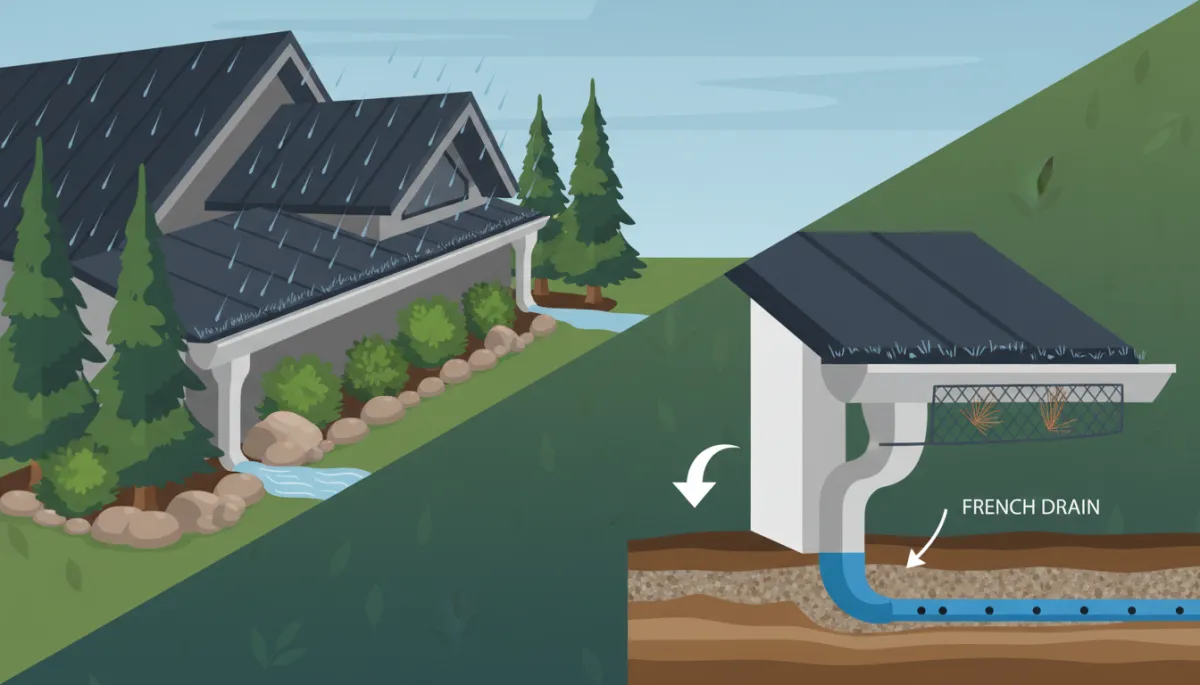
Not all guards are created equal, especially when it comes to fine, flexible needles. Snohomish Roofing Company can recommend guard systems specifically suited to our local tree species, such as micro-mesh covers that allow water through while keeping even small debris out. Properly installed guards reduce the frequency of gutter cleaning, help maintain full water-carrying capacity during storms, and protect against the weight and sagging that can occur when gutters are packed with wet needles and leaves. They do not eliminate maintenance entirely, but they can significantly extend the time between cleanings and keep your gutters functioning reliably between service visits.
Downspout Placement, Extensions, and Safe Water Discharge
Even the best gutters cannot protect your home if the water is not discharged safely away from the foundation. Downspouts must be correctly sized, adequately spaced, and strategically located. Long roof lines or areas where multiple roof surfaces feed into one gutter may require additional downspouts to prevent overloading a single outlet. Snohomish Roofing Company assesses where water naturally concentrates on your roof and ensures that downspouts are placed to relieve those high-flow areas efficiently.
Once water reaches the bottom of the downspout, it should not simply spill out at the base of the wall. Extensions, splash blocks, or underground drain lines are often necessary to route water several feet away from the home. In the saturated soils common in the Puget Sound area, even a small amount of constant runoff near the foundation can lead to seepage into crawlspaces or basements. Properly designed downspout extensions protect your home’s structure, reduce erosion in planting beds, and help keep walkways and driveways from icing over in cold weather by moving water to safer discharge locations.
Fascia Protection and the Roof–Gutter Connection
Fascia boards — the vertical boards at the roof edge where gutters are mounted — are particularly vulnerable in our wet climate. When gutters overflow, leak at seams, or pull away from the home, water runs down behind them and soaks the fascia. Over time, this can lead to peeling paint, soft or spongy wood, and eventually full rot that requires replacement. Once fascia is compromised, gutters lose their secure attachment point, and the risk of sagging or collapse increases significantly during heavy storms or when gutters are full of debris.
Snohomish Roofing Company pays close attention to the roof–gutter interface. This may include installing or repairing metal drip edge, ensuring gutters are pitched correctly to the downspouts, and confirming that fasteners are properly anchored into solid framing, not just fascia material. In some cases, upgrading to hidden hangers or stronger fasteners can improve long-term performance. Protecting fascia is not just a cosmetic concern; it is a structural issue that directly affects the stability of your gutter system and the health of your roof edge.
French Drains and Yard Drainage: Managing Water on the Ground
Effective water management does not stop at the bottom of the downspout. In many Snohomish County neighborhoods, clay soils, sloped lots, and high water tables make it difficult for surface water to disperse naturally. The result can be standing water in lawns, muddy side yards, and saturated soil near foundations, even when gutters and downspouts are functioning as intended. To address these issues, many homeowners incorporate French drains and other yard drainage solutions into their overall water management plan.
A French drain is a perforated pipe set in a gravel-filled trench that collects and redirects excess water. Downspouts can be tied into these systems so that roof runoff is carried away underground to a safer discharge point, such as a lower part of the yard or a designated drainage area. While Snohomish Roofing Company focuses on roofs and gutters, understanding how water behaves on your property allows the team to recommend when coordination with drainage contractors may be beneficial. A comprehensive approach ensures that water is controlled from the moment it hits your roof until it leaves your property, reducing the risk of both roof damage and landscape problems.
Seasonal Gutter Cleaning and Maintenance Schedule
Even with well-designed gutters and quality guards, regular maintenance is essential in the Pacific Northwest. As a general guideline, most Snohomish County homeowners should plan for at least two professional cleanings per year: once in late fall after the majority of leaves and needles have dropped, and once in late winter or early spring to clear any remaining debris and check for storm damage. Homes under heavy tree cover, or those with particularly needle-heavy evergreens, may require more frequent service to keep water flowing freely during the wettest months.
During a cleaning, a thorough contractor will remove debris, flush downspouts, inspect for leaks and sagging, and look for early signs of fascia or roof edge issues. Snohomish Roofing Company can also coordinate roof inspections at the same time, checking flashing, shingles, and penetrations for problems that may not be visible from the ground. Establishing a consistent maintenance schedule not only extends the life of your gutters, it also provides regular check-ins on the overall health of your roofing system before minor issues become major repairs.
Signs of Gutter Failure and Roof Damage from Overflow
Because gutters are above eye level, early warning signs are easy to miss. However, there are several indicators homeowners can watch for between professional inspections. Visible overflow during rain — water spilling over the front edge of the gutter or cascading from roof valleys — is an obvious red flag. So are gutters that appear to be pulling away from the fascia, sagging in the middle of runs, or showing rust, peeling paint, or staining on the outside surfaces. These conditions suggest that the system is either clogged, undersized, improperly pitched, or structurally compromised.
Inside and around the home, look for water stains on soffits, fascia, or siding; peeling paint at the roof edge; damp areas in crawlspaces near exterior walls; and erosion or depressions in the soil below downspouts. On the roof itself, clogged or overflowing gutters can cause water to back up under shingles, leading to soft decking, leaks into attics or ceilings, and accelerated shingle deterioration along the eaves. If you notice any of these signs, it is wise to schedule a professional evaluation promptly. Snohomish Roofing Company can determine whether the issue is primarily one of cleaning and maintenance, or whether a redesign or upgrade of your gutter system is necessary to protect your roof and home long term.
Partnering with a Local Expert for Long-Term Protection
Gutters and drainage may not be the most visible part of your property, but in the rainy Pacific Northwest they play a central role in preserving your home’s structure, comfort, and value. Proper sizing, quality materials, thoughtful downspout placement, integration with yard drainage, and a realistic maintenance plan all work together to manage the tremendous amount of water your roof sheds each year. Working with a local contractor who understands Snohomish County weather patterns, soils, and vegetation ensures that your system is designed for real-world conditions, not just minimum building standards.
Snohomish Roofing Company combines roofing expertise with practical, field-tested gutter solutions tailored to Puget Sound homes. Whether you need new 6-inch K-style seamless gutters, targeted repairs, effective guards for evergreen needles, or a comprehensive inspection to diagnose recurring overflow issues, their team can provide clear recommendations and professional installation. An investment in your gutters and drainage today helps prevent leaks, rot, and foundation problems tomorrow, giving you confidence that your home is ready for whatever the Pacific Northwest weather delivers.
Don't let clogged or undersized gutters damage your Snohomish County roof. Snohomish Roofing Company installs, cleans, and inspects gutters and roofing systems throughout the Puget Sound area. Call (360) 913-2021 or visit https://snohomishroof.com today.
SEO Title: Gutters and Drainage for Rainy Pacific Northwest Homes | Snohomish Roofing Company
Meta Description: Learn why properly sized gutters, downspouts, and drainage systems are essential for Puget Sound and Snohomish County homes. Snohomish Roofing Company explains 6-inch K-style gutters, gutter guards, French drains, and maintenance tips to protect your roof and foundation from the Pacific Northwest’s heavy rain.