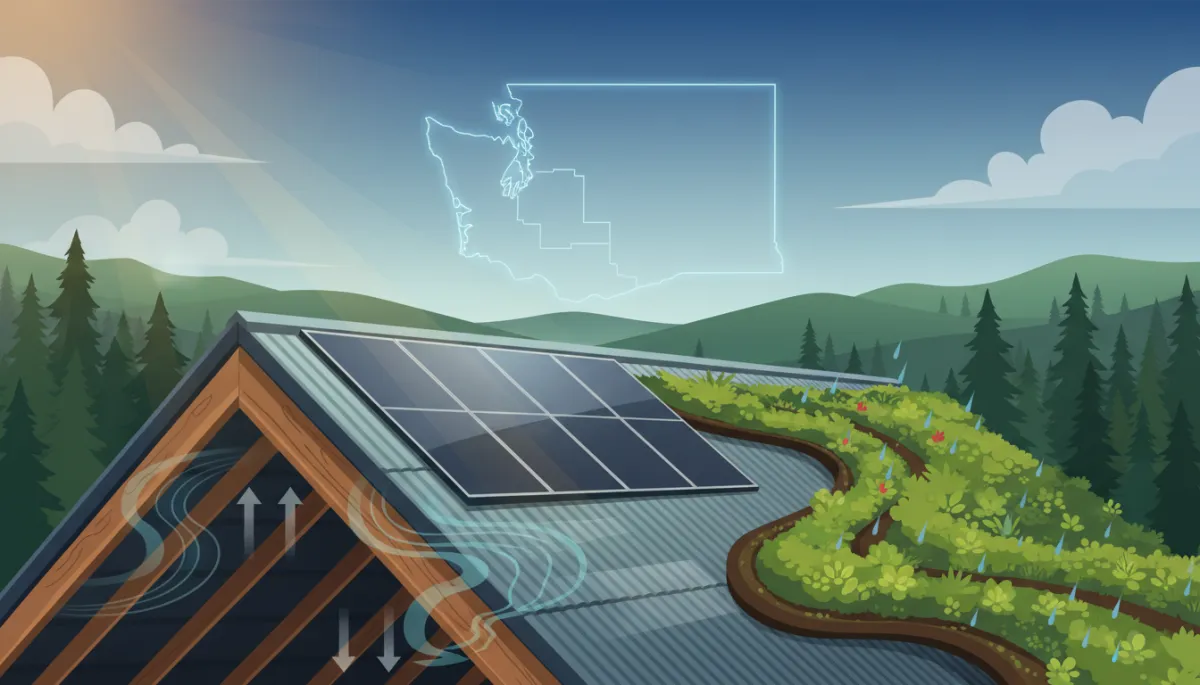
Energy-Efficient Roofing in Pacific Northwest
Roofing, Energy Efficiency, Pacific Northwest, Snohomish County
Energy-Efficient Roofing Options for Pacific Northwest Homeowners
Your roof does more than keep out the rain — the right roofing system can significantly reduce your home's energy costs in Western Washington. Snohomish Roofing Company helps Snohomish County homeowners choose energy-efficient options that perform in our unique climate. Call (360) 913-2021 or visit https://snohomishroof.com for a FREE energy-efficient roofing consultation.
For homeowners in Snohomish County and across the Pacific Northwest, energy efficiency is about more than hot summers. Our cool, damp climate, long heating season, and occasional heat waves mean your roof must manage heat loss in winter, resist moss and moisture, and prevent overheating on the few but growing number of hot, sunny days. Choosing the right roofing system can lower utility bills, improve comfort, and protect your home for decades.
How Roofing Affects Home Energy Use in the Pacific Northwest
In Western Washington, most homes spend far more energy on heating than on cooling. That makes heat retention and moisture control just as important as solar reflectance. Your roof and attic work together as a thermal and moisture control system. When they are properly designed, you lose less heat through the roof deck in winter and avoid trapped heat and humidity in summer that can drive up air-conditioning and dehumidification costs, even in a cooler climate like Snohomish County’s.
Key roofing-related factors that influence energy use include:
- Roof color and reflectance – Lighter, more reflective surfaces absorb less solar heat, reducing attic temperatures on sunny days and during heat waves.
- Roofing material and mass – Materials like metal, tile, or composite shingles transfer and store heat differently, affecting how quickly your home warms or cools.
- Insulation levels – Adequate attic or roof insulation reduces conductive heat loss in winter and heat gain in summer, which is critical under the Washington State Energy Code.
- Ventilation and air sealing – Controlled airflow prevents condensation, protects insulation performance, and helps exhaust excess attic heat and moisture.
An energy-smart roof for the Pacific Northwest balances these elements to keep your home warmer in winter, cooler during summer hot spells, and drier all year long, while meeting or exceeding current Washington State Energy Code requirements based on the 2021 Washington State Energy Code (WSEC) framework.
Cool Roofing Concepts: Reflective Shingles and Metal Roofs
“Cool roofing” refers to materials and colors that reflect more sunlight and absorb less heat than standard products. While cool roof requirements in Washington’s energy code currently focus mainly on low-slope commercial roofs, Pacific Northwest homeowners increasingly choose cool roofing voluntarily to improve comfort and reduce cooling loads on hotter summer days (see U.S. Department of Energy guidance on energy-efficient roofing, energy.gov/energysaver/design/energy-efficient-roofing).
Reflective Asphalt Shingles
Modern asphalt shingles are available in “cool color” formulations that use reflective granules to bounce more solar energy away from your roof, even in medium or darker tones that suit Pacific Northwest aesthetics. Compared to traditional dark shingles, reflective shingles can lower roof surface temperatures by several degrees, which in turn can reduce attic temperatures and help protect your insulation performance. They are a practical choice if you prefer the look and cost profile of asphalt but want better energy performance and longer shingle life under UV exposure and intermittent heat.
Energy-Efficient Metal Roofing
Metal roofing performs especially well in the Pacific Northwest. Steel or aluminum panels with high-quality reflective coatings can significantly reduce solar heat gain while shedding rain, snow, and debris efficiently. Contrary to common myths, a properly insulated and ventilated metal roof is not noisier than other materials and can be highly energy efficient, particularly when paired with a vented air space beneath the panels that helps dissipate heat before it reaches the sheathing and attic.
Metal roofs are also durable and recyclable, often lasting 40–50 years or more. Over that lifespan, the combination of lower maintenance, reduced cooling demand during warm spells, and strong performance in heavy rain makes metal roofing an attractive long-term investment for Snohomish County homeowners who want both energy efficiency and resilience.
The Critical Role of Attic Insulation and Ventilation
No matter how advanced your roofing material is, your home will not perform efficiently without proper attic insulation and ventilation. The current 2021 Washington State Energy Code, which remains in effect while the next cycle is being developed, sets minimum insulation R-values for roof and ceiling assemblies based on climate zone. In Western Washington, that typically means substantial insulation levels to minimize heat loss through the roof during our long heating season (sbcc.wa.gov/state-codes-regulations-guidelines/state-building-code/energy-code).
Insulation for Heat Retention and Comfort
Adequate attic insulation acts as a thermal blanket, reducing heat transfer between your living space and the roof. In winter, it helps keep warm air inside, easing the load on your furnace or heat pump. In summer, it slows heat from the roof deck from radiating into your home. Snohomish Roofing Company can coordinate with insulation professionals or evaluate your existing insulation during a roof replacement to ensure your assembly meets or exceeds code and local best practices for our region.
Ventilation for Moisture Control and Energy Performance
Proper attic ventilation is essential in the Pacific Northwest’s damp climate. Without sufficient intake and exhaust vents, warm, moist indoor air can migrate into the attic, condense on cold surfaces, and degrade insulation, framing, and roof sheathing. Wet or compressed insulation loses R-value, forcing your heating system to work harder. Well-designed soffit and ridge vent systems help remove moisture and excess heat, preserving both your roof and your energy efficiency over time.
Solar-Ready Roofing Systems for Future Upgrades
Even if you are not ready to install solar panels or solar shingles today, it is wise to consider a solar-ready roof when planning a replacement. The federal solar tax credit (Section 25D) currently offers a 30% credit on qualifying solar systems, including solar roofing products, through at least 2032, but the underlying roof structure must be able to support and integrate that equipment effectively (roofvista.com/blog/roofing-tax-credits-2026-what-expired).
A solar-ready roofing project typically includes:
- Selecting roofing materials compatible with common solar mounting systems, such as standing-seam metal or architectural asphalt shingles.
- Ensuring adequate roof structure, sheathing condition, and layout (minimal shading, appropriate orientation) for future solar production.
- Coordinating roof penetrations, flashing, and underlayment details so future solar installers can tie in without compromising weatherproofing.
Snohomish Roofing Company can help you evaluate whether your new roof should be designed with solar in mind and work with your solar provider to protect your long-term investment and maximize available incentives.
Green and Living Roofs: Stormwater Management and Insulation
Green roofs, also known as living roofs, add a layer of vegetation and growing medium above a waterproof membrane. While they are more common on low-slope commercial or multifamily buildings, some Pacific Northwest homeowners are exploring smaller-scale green roofs on additions, garages, or accessory dwelling units. According to the U.S. Environmental Protection Agency, green roofs provide excellent insulation, reduce urban heat island effects, and significantly improve stormwater management by absorbing rainfall and slowing runoff (epa.gov/heat-islands/using-green-roofs-reduce-heat-islands).
In a rainy region like Snohomish County, green roofs can lessen the burden on local stormwater systems and help manage water on-site. They also add thermal mass and additional insulating value, moderating roof surface temperatures and reducing heat loss. However, they require careful structural evaluation, waterproofing, and drainage design. Snohomish Roofing Company can advise whether a green roof concept is appropriate for your structure and connect you with qualified partners for design and maintenance planning.
Washington State Energy Code Requirements for Residential Roofing
As of 2026, Washington does not yet have a separate “2026 energy code” in force. Roofing projects for single-family homes and low-rise residential buildings in Snohomish County are governed by the 2021 Washington State Energy Code – Residential, which is based on the 2021 International Energy Conservation Code and sets minimum performance standards for the building envelope, including roofs (sbcc.wa.gov/state-codes-regulations-guidelines/state-building-code/energy-code).
For homeowners, the most relevant provisions include:
- Required minimum R-values for roof/ceiling assemblies, which vary by climate zone but are generally high in Western Washington to control heat loss.
- Air sealing and insulation installation quality standards to ensure the building envelope performs as designed.
- Coordination with other building code requirements, such as fire resistance ratings, especially in Wildland-Urban Interface areas where Class A or B roofing may be required (washingtonroofauthority.com/washington-roofing-materials-guide).
The next code cycle, often referred to as the 2024 WSEC, is in the adoption process and is expected to take effect in 2027, potentially updating insulation and envelope performance requirements. Working with a contractor who tracks these developments, like Snohomish Roofing Company, helps ensure that your new roof not only complies with current rules but is well positioned for future standards and resale expectations.
Tax Credits and Incentives for Snohomish County Homeowners
The incentive landscape for energy-efficient roofing has changed in recent years. The federal Section 25C Energy-Efficient Home Improvement Credit, which previously covered some roofing materials, expired on December 31, 2025 and is not available for projects installed in 2026 (roofvista.com/blog/roofing-tax-credits-2026-what-expired). Homeowners who completed qualifying roofing work in 2025 may still claim that credit on their 2025 tax return, but new 2026 projects are not eligible under 25C.
However, important incentives remain:
- The federal solar tax credit (Section 25D) continues to offer a 30% credit for qualifying solar energy systems, including solar panels and solar roofing products that generate electricity, through at least 2032. This does not apply to non-solar roofing materials but can significantly offset the cost of a solar-ready roof paired with photovoltaic equipment (roofvista.com/blog/roofing-tax-credits-2026-what-expired).
- Snohomish County PUD (SnoPUD) offers residential rebates for weatherization measures such as insulation, duct sealing, and efficient windows, which complement an energy-efficient roofing project by improving overall envelope performance (snopud.com/save-energy/residential/rebates/weatherization). While these rebates do not directly cover roofing materials, they can reduce your total project cost if you combine roof work with other upgrades.
- Snohomish County’s Weatherization Program provides free energy improvements, including insulation and air sealing, to qualifying low-income households, which can enhance the benefits of a new roof (snohomishcountywa.gov/600/Weatherization-Program).
Because programs and eligibility criteria can change, Snohomish Roofing Company recommends that homeowners consult their tax professional and local utility websites before starting a project. Our team can help you identify which rebates or solar incentives might apply to your situation and plan your roofing work accordingly.
Best Roofing Materials for Energy Performance in the PNW’s Cooler Climate
In a region defined by cool temperatures, heavy rainfall, and occasional heat waves, the “best” energy-efficient roofing material is one that balances reflectivity, insulation compatibility, durability, and moisture resistance. According to resources from the U.S. Department of Energy and regional building experts, several options stand out for the Pacific Northwest (energy.gov/energysaver/design/energy-efficient-roofing; seattletimes.com/sponsored/best-roofing-materials-for-the-pacific-northwest):
- Architectural asphalt shingles with cool-color technology – Cost-effective, widely available, and suitable for most Snohomish County homes, especially when paired with code-compliant attic insulation and ventilation.
- Standing-seam or panel metal roofing – Highly durable, reflective, and ideal for shedding rain and snow, with excellent performance when installed over a vented assembly and properly insulated deck.
- Composite or synthetic shingles – Products made from recycled or engineered materials can mimic slate or wood while offering improved durability and energy performance in wet climates.
- Tile and slate (where structure allows) – Heavier materials that provide thermal mass and longevity, best suited to homes engineered for their weight and paired with robust underlayment and insulation.
For most single-family homes in Snohomish County, cool-color architectural shingles or reflective metal roofing, combined with upgraded attic insulation and balanced ventilation, deliver the best value in terms of energy savings, comfort, and longevity. Snohomish Roofing Company evaluates your home’s architecture, existing attic conditions, and long-term plans (including potential solar) to recommend the most appropriate system for your specific property and budget.
Partner with Snohomish Roofing Company for an Energy-Smart Roof
An energy-efficient roof in the Pacific Northwest is not a single product but a coordinated system: high-performing materials, correct installation, proper flashing, balanced ventilation, and code-compliant insulation all working together. Whether you are replacing an aging roof, planning an addition, or preparing for future solar, Snohomish Roofing Company brings local experience and up-to-date knowledge of Washington State Energy Code requirements, regional best practices, and available incentives to every project.
Make your Snohomish County home more energy efficient from the top down. Snohomish Roofing Company installs energy-smart roofing systems throughout the Puget Sound area. Call (360) 913-2021 or visit https://snohomishroof.com today.
SEO Title: Energy-Efficient Roofing Options for Pacific Northwest Homeowners | Snohomish Roofing Company
Meta Description: Discover the best energy-efficient roofing options for Pacific Northwest and Snohomish County homes, including cool roofs, metal roofing, insulation, ventilation, solar-ready systems, green roofs, Washington energy code requirements, and current incentives. Learn how Snohomish Roofing Company can improve your home’s comfort and reduce energy costs.