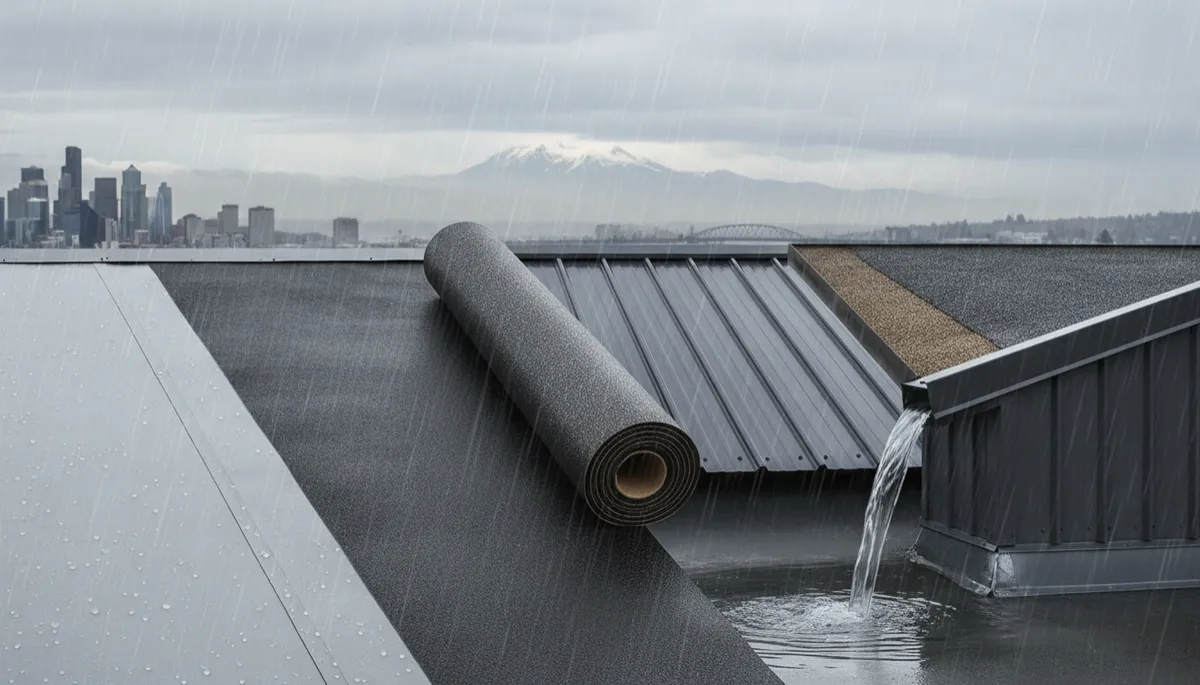
Commercial Roofing in Puget Sound | Snohomish Roofing
Commercial Roofing, Puget Sound, Snohomish County
Commercial Roofing Systems for Puget Sound Businesses
Your commercial roof is one of your business's most critical assets — and in the Puget Sound's relentless rain, it needs to be built right. Snohomish Roofing Company provides expert commercial roofing installation and maintenance throughout Snohomish County. Call (360) 913-2021 or visit https://snohomishroof.com for a FREE commercial roof assessment.
For commercial property owners in the Puget Sound region, the roof is not just another line item in the budget. It protects inventory, equipment, tenants, and operations from months of steady rain, high humidity, and periodic windstorms. In Snohomish County, where moisture is a year-round concern, choosing the right commercial roofing system — and maintaining it properly — is essential to protecting your investment and avoiding disruptive leaks and emergency repairs.
The Pacific Northwest Roofing Environment: Why It Matters
The Puget Sound climate places unique stress on commercial roofs. Long wet seasons, frequent light-to-moderate rainfall, and high humidity mean that roof systems rarely get a chance to dry out fully. Over time, this accelerates the deterioration of seams, flashings, and sealants, especially on low-slope and flat roofs common on warehouses, retail centers, and office buildings. Industry research shows that aging low-slope systems in wet regions tend to fail earlier than in drier climates because moisture intrusion and degraded flashing compound year after year. In this environment, the quality of materials, installation, and drainage design directly influence the roof’s service life and total cost of ownership.
Overview of Main Commercial Roofing Systems
TPO (Thermoplastic Polyolefin)
TPO is a single-ply membrane that has become a leading choice for commercial reroofs across the United States and particularly in wet regions like the Pacific Northwest. It is typically installed as a white “cool roof” membrane, reflecting sunlight and helping reduce cooling costs in the warmer months. TPO offers strong moisture resistance and flexibility, and when seams are properly heat-welded, the system can perform very well under persistent rain. However, performance is highly dependent on membrane quality and installation. Some TPO formulations have shown premature aging and seam issues when exposed to standing water and UV over time, so product selection and experienced installation are critical for Puget Sound buildings.
EPDM (Ethylene Propylene Diene Monomer)
EPDM is a black rubber membrane known for its durability and flexibility. It has been used on commercial roofs for decades. EPDM handles temperature fluctuations well and is resistant to UV, but in wet climates the details matter: seams are typically adhered or taped rather than heat-welded, which can be more vulnerable if ponding water is allowed to sit over joints for extended periods. On Puget Sound buildings with well-designed drainage and regular maintenance, EPDM can provide long service life, but owners should be aware that its dark color absorbs heat and may not offer the same energy benefits as white TPO or PVC membranes unless paired with additional insulation or coatings.
Modified Bitumen
Modified bitumen systems are multi-ply asphalt-based membranes reinforced with fiberglass or polyester. They are often installed as torch-applied or cold-applied sheets. In rainy climates similar to ours, multi-ply SBS (styrene-butadiene-styrene) modified bitumen is considered a robust option because its redundancy and thickness handle intermittent ponding and wet-freeze cycles better than many older systems. For Puget Sound properties, modified bitumen can be an excellent choice on low-slope roofs where durability and resistance to standing water are priorities, provided that flashings and seams are carefully installed and inspected over time.
Metal Roofing Systems
Standing seam metal roofing is widely recognized as one of the best performers in wet environments. Interlocking raised seams shed water efficiently, and properly detailed metal roofs can deliver 40–70 years of service life with relatively low maintenance. In the Puget Sound region, metal is especially attractive for sloped commercial roofs on retail buildings, office complexes, and light industrial facilities. Metal resists moss growth better than many other materials, handles wind-driven rain, and can be designed to integrate future solar arrays. The main requirements are correct detailing at penetrations, gutters, and transitions, as well as appropriate underlayment to manage condensation and backup moisture.
Built-Up Roofing (BUR)
Built-up roofing systems use multiple layers of bitumen and reinforcing felts, often topped with gravel or a cap sheet. Many older commercial buildings in Snohomish County still have BUR systems installed in the 1990s and early 2000s. While BUR offers redundancy and good protection when new, these roofs can deteriorate more quickly in the Pacific Northwest’s wet climate. Prolonged moisture exposure degrades felts, flashings, and surfacing, leading to blistering, cracking, and leaks. As these roofs age, many owners are transitioning to modern single-ply or modified bitumen systems that offer easier maintenance, better energy performance, and improved moisture resistance.
Performance in Rain and Moisture: What Puget Sound Owners Should Expect
In a climate like Snohomish County’s, all commercial roofing systems must be evaluated first through the lens of water management. Even high-quality membranes can fail early if water is allowed to pond, drains clog, or flashings are not detailed correctly. TPO and PVC single-ply systems are now the dominant reroofing choice in similar Pacific Northwest markets because they combine moisture resistance with flexibility and relatively quick installation. However, research and contractor experience highlight that drainage and seam integrity remain the main vulnerabilities. Modified bitumen and BUR are more forgiving of occasional standing water due to their thickness and redundancy, but they are not immune to long-term saturation. Metal excels at shedding water on sloped roofs, making it one of the most resilient choices where building design allows for adequate pitch.
Drainage Design and Ponding Water Prevention
For low-slope commercial roofs in the Puget Sound area, drainage design is as important as membrane selection. Persistent ponding water stresses seams, accelerates aging, and magnifies even small installation defects. Over time, this can lead to leaks, structural loading concerns, and premature roof failure. A well-designed commercial roof in Snohomish County should include:
- Adequate slope to drains or scuppers to move water off the roof quickly.
- Sufficient number and size of internal drains and overflow provisions.
- Regular clearing of debris from gutters, downspouts, and drain bowls as part of a maintenance plan.
When Snohomish Roofing Company evaluates a roof, drainage and ponding patterns are among the first items reviewed. Correcting slope with tapered insulation, adding drains, or reworking gutters can significantly extend the life of a membrane system, particularly TPO or EPDM, which are more sensitive to standing water at seams and penetrations.
Proper Seam Installation for Membrane Roofing
On single-ply roofs, seams are the most critical detail. In a wet climate, any weakness along a seam becomes an immediate pathway for water intrusion. For TPO and PVC, seams are typically heat-welded to create a continuous, monolithic surface. Proper welding temperature, overlap width, and field testing of welds are essential to avoid voids and cold welds. For EPDM, seams are joined with tapes or adhesives that must be installed on clean, dry surfaces — a challenge when working around Puget Sound weather windows. Modified bitumen seams, whether torch-applied or cold-applied, must fully bond and be rolled correctly to prevent fishmouths and voids. An experienced commercial roofer in Snohomish County will schedule work around weather, protect seams during installation, and conduct thorough inspections and testing to verify seam integrity before project completion.
Preventive Maintenance Programs for Wet-Climate Roofs
Even the best commercial roofing system will fail early without regular maintenance, especially under Puget Sound’s constant moisture. A structured preventive maintenance program typically includes semiannual inspections — often in the fall before the heaviest rains and in the spring after winter storms — plus additional checks after major wind events. Key tasks include:
- Cleaning drains, scuppers, and gutters to ensure free water flow.
- Inspecting seams, flashings, and penetrations for early signs of lifting, cracking, or sealant failure.
- Checking for membrane punctures, mechanical damage from rooftop equipment, and areas of ponding that persist more than 48 hours after rainfall.
- Documenting conditions with photos and reports to support warranty compliance and long-term planning.
Increasingly, building owners are also using technologies such as infrared scans and moisture surveys to detect trapped moisture before it becomes visible inside the building. A proactive maintenance relationship with a local contractor like Snohomish Roofing Company allows issues to be addressed early, often with minor repairs rather than major tear-offs, reducing both risk and cost over the roof’s life.
How Commercial Roofing Differs from Residential Roofing
Many Puget Sound business owners also own homes and may be familiar with residential roofing. However, commercial roofing is a different discipline. Most residential roofs are steep-slope and use asphalt shingles, metal, or composite products. Commercial roofs are often low-slope or flat, with extensive mechanical equipment, penetrations, and parapet walls. The systems themselves — TPO, EPDM, modified bitumen, BUR, or structural metal — require different installation techniques, safety practices, and design calculations. Commercial projects must also consider tenant operations, rooftop access needs, drainage design, and sometimes integration with solar or HVAC upgrades. For these reasons, it is important to work with a contractor that specializes in commercial roofing rather than one that primarily installs residential shingles and occasionally takes on flat roofs.
Life-Cycle Cost Analysis: Looking Beyond the Lowest Bid
Choosing a commercial roofing system based solely on lowest initial cost often leads to higher long-term expenses. Life-cycle cost analysis considers the full picture: installation cost, expected service life, energy performance, maintenance needs, and potential disruption to operations. For example, a basic single-ply membrane with minimal insulation might be cheaper upfront than a thicker, higher-quality membrane with tapered insulation and robust flashings. However, if the lower-cost system requires frequent leak repairs, has a shorter warranty, and contributes to higher energy bills, its total cost over 20–30 years may be significantly higher. In the Puget Sound climate, where moisture accelerates wear, investing in better materials, improved drainage, and a maintenance plan often yields a stronger return on investment. Snohomish Roofing Company can help owners compare options and model long-term costs so decisions are based on value, not just the initial proposal number.
What to Look for When Hiring a Commercial Roofer in Snohomish County
Selecting the right contractor is as important as choosing the right roofing system. When evaluating commercial roofers in Snohomish County, consider the following criteria:
- Commercial experience: Verify that the contractor has a strong portfolio of completed commercial projects in the Puget Sound region, including roofs similar in size and complexity to yours.
- Local code and climate knowledge: The contractor should understand Snohomish County requirements, including when permits are needed and how to design roofs for our wet climate and potential critical areas.
- Manufacturer certifications: Look for certifications from major roofing manufacturers, which can qualify your project for extended warranties and demonstrate that installers have been trained on specific systems such as TPO, EPDM, or modified bitumen.
- Safety and insurance: Confirm that the roofer maintains proper licensing, liability insurance, and worker’s compensation coverage, and that they follow robust safety protocols for commercial job sites.
- Detailed proposals and communication: A professional commercial roofer will provide clear, itemized scopes of work, outline material options, explain warranties, and communicate scheduling and phasing to minimize disruption to your business or tenants.
Snohomish Roofing Company focuses on these standards for every commercial client, from small business owners to multi-building property managers, ensuring that each project is designed and executed for long-term performance in our wet Puget Sound climate.
Conclusion: Build for the Climate, Plan for the Long Term
Commercial roofing in Snohomish County is not a one-size-fits-all decision. TPO, EPDM, modified bitumen, metal, and built-up roofing each have strengths and limitations, especially under the constant moisture and variable temperatures of the Puget Sound region. The right solution for your property depends on roof slope, existing conditions, budget, energy goals, and how long you plan to own the building. Regardless of the system you choose, success in this climate requires excellent drainage, meticulous seam and flashing work, and a proactive maintenance program that keeps drains clear and small issues from becoming major leaks. By approaching your roof as a long-term asset and partnering with an experienced local commercial roofer, you can control life-cycle costs, protect your operations, and avoid the disruption that comes with unexpected failures.
Protect your Puget Sound business with a commercial roofing system built for our wet climate. Snohomish Roofing Company serves businesses throughout Snohomish County. Call (360) 913-2021 or visit https://snohomishroof.com.
SEO Title: Commercial Roofing Systems for Puget Sound Businesses | Snohomish Roofing Company
Meta Description: Learn how TPO, EPDM, modified bitumen, metal, and built-up commercial roofing systems perform in the wet Puget Sound climate. Discover drainage, seam installation, preventive maintenance, life-cycle cost analysis, and how to choose a commercial roofer in Snohomish County with Snohomish Roofing Company.