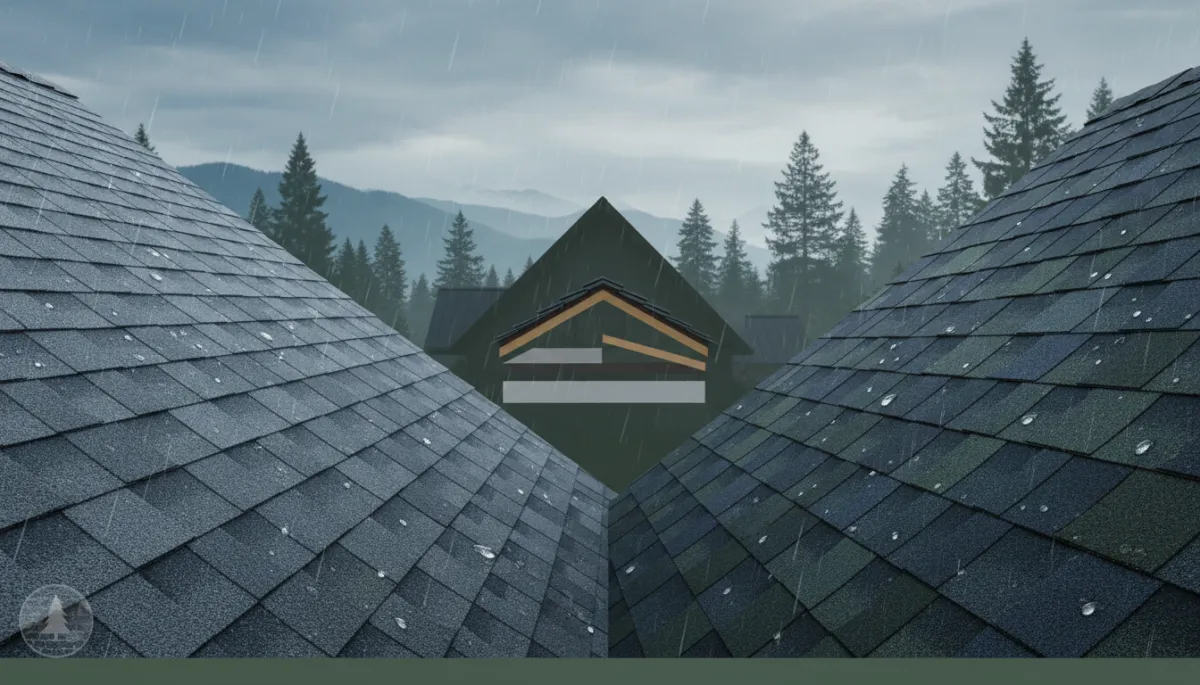
Asphalt vs. Architectural Shingles for PNW Homes
Roofing, Asphalt Shingles, Architectural Shingles, Snohomish County, Pacific Northwest
Asphalt vs. Architectural Shingles: Which Is Right for Your PNW Home?
Choosing the right shingles for your Pacific Northwest home is a decision that affects performance, appearance, and cost for the next 20-30 years. Snohomish Roofing Company helps Snohomish County homeowners make the smartest choice for their specific situation. Call (360) 913-2021 or visit https://snohomishroof.com for a FREE shingle consultation today.
Understanding 3-Tab Asphalt Shingles
Three-tab asphalt shingles are the traditional, flat shingles many homeowners picture when they think of a standard roof. Each shingle is cut into three uniform tabs, creating a simple, repetitive pattern on the roof surface. They are built with a fiberglass mat, asphalt coating, and mineral granules, offering basic weather protection at an affordable price point. For Snohomish County homeowners watching every dollar, three-tab shingles can seem appealing because they typically have the lowest upfront cost of any asphalt product on the market.
However, three-tab shingles are considered “builder grade” in today’s market. They are thinner, lighter, and less robust than architectural shingles. In the Pacific Northwest’s wet, windy climate, that difference in construction can translate into a shorter lifespan, more frequent repairs, and a roof that shows wear sooner. Three-tab shingles usually carry lower wind ratings and shorter warranties, which are important considerations for homes exposed to Puget Sound storm systems and year-round moisture. They still have a place, especially on tight budgets or low-value outbuildings, but they are no longer the default choice for most long-term residential roof replacements.
What Are Architectural or Dimensional Shingles?
Architectural, also called dimensional or laminate, shingles are the modern standard for residential roofing. Instead of a single flat layer, they use multiple laminated layers of asphalt to create a thicker, sculpted profile. This added dimension gives the roof a richer, more substantial look that can mimic the appearance of cedar shakes or slate, without the maintenance demands or cost of those premium materials. For many Snohomish County neighborhoods, architectural shingles have become the norm on both new builds and roof replacements because they balance value, performance, and curb appeal remarkably well.
From a performance standpoint, architectural shingles are engineered to handle tougher conditions. They are typically thicker, heavier, and use stronger adhesives and reinforced nailing zones. That translates into higher wind resistance ratings, better impact performance, and improved resistance to the constant rain, drizzle, and wind-driven moisture that define life in the Pacific Northwest. Many architectural product lines also incorporate algae-resistant granules, which help reduce the streaking and staining that can be common on damp, shaded Snohomish roofs. For homeowners focused on long-term value and durability, architectural shingles are often the superior choice.
Cost Comparison for PNW Roof Replacements
Cost is usually the first question homeowners ask, and the answer matters even more when you factor in the Pacific Northwest’s higher labor and material standards. Nationally, three-tab shingles often run around $3.00–$5.50 per square foot installed, while architectural shingles are typically $4.50–$8.50 per square foot installed. In the PNW, including Snohomish County, you should expect a regional premium of roughly 10–25% due to frequent rain delays, the need for moisture-resistant underlayments, and stricter local codes. That means three-tab roofs may land in the range of about $3.30–$6.60 per square foot, while architectural shingles commonly fall between roughly $5.00–$9.50 per square foot installed, depending on roof complexity and product line.
On a typical Snohomish County home with about 2,000 square feet of roof area, a three-tab replacement might start around the mid–$10,000s, while a well-installed architectural system with upgraded underlayment and ventilation can range higher, often in the high teens to mid-$20,000s for more complex roofs. While that difference is meaningful, architectural shingles usually last longer and require fewer repairs, so the cost per year of service life is often lower than with three-tab. Snohomish Roofing Company provides detailed, line-item estimates so you can see exactly where your investment is going, including tear-off, disposal, underlayment, flashing, and any code-required upgrades. Transparent pricing helps you compare true long-term value, not just the initial bid number.
Lifespan in the Pacific Northwest’s Wet Climate
Manufacturer brochures often quote ideal lifespans, but real-world performance in the Pacific Northwest can be different from drier regions. Three-tab shingles are commonly rated for 20–25 years, yet in our damp, moss-prone climate, they often reach the end of their reliable life closer to 15–20 years. Constant moisture, limited sun exposure in winter, and organic debris from overhanging trees all accelerate granule loss and shingle deterioration. Once granules wear away, the asphalt underneath becomes more vulnerable to UV damage and cracking, shortening the roof’s useful life even further.
Architectural shingles, on the other hand, are generally rated for 30 years or more, with many marketed as 30-, 40-, or even “lifetime” products. In Western Washington, a properly installed, well-ventilated architectural roof can often deliver 25–30 years of service, assuming routine maintenance and timely moss treatment. The extra thickness and layered construction provide more material to resist weathering and protect the underlying mat. When you spread the total installed cost over that longer lifespan, architectural shingles frequently deliver a stronger return on investment than three-tab options, especially for homeowners planning to stay in their Snohomish County home for the long term.
Wind Resistance for Puget Sound Storms
While the Puget Sound region does not see hurricanes, fall and winter storms can bring strong gusts, wind-driven rain, and localized tree damage. Shingle wind ratings are measured under ASTM standards such as D3161 and D7158. Basic three-tab shingles often meet lower wind classes, with ratings in the 60–90 mph range depending on the product and installation pattern. Under high gusts, their lighter weight and flatter profile can make them more susceptible to lifting and blow-offs, particularly on older roofs or those installed with fewer nails than current best practices require.
Most modern architectural shingles are engineered for higher wind performance, commonly rated up to 110–130 mph when installed according to manufacturer guidelines, including six-nail patterns in high-wind zones. Many products meet ASTM D3161 Class F and ASTM D7158 Class G or H ratings, which align well with the wind design speeds used in local building codes. In practical terms, that means better resistance to uplift, fewer missing shingles after storms, and a reduced risk of leaks caused by wind-driven rain. Snohomish Roofing Company follows manufacturer-specified nailing patterns, starter courses, and underlayment details to ensure you actually receive the wind performance the shingle is rated for, not just what is printed on the wrapper.
Aesthetic Differences and Curb Appeal Considerations
Your roof can account for up to 40% of your home’s visible exterior, so appearance is not just cosmetic; it influences resale value and neighborhood appeal. Three-tab shingles offer a flat, uniform look with a repeating pattern. On some simple rooflines, this can appear clean, but on many homes it reads as basic or dated. Color options are more limited, and the lack of shadow lines can make the roof look thinner and less substantial, which may not complement the architectural character of many Snohomish County homes, especially Craftsman, Northwest contemporary, or farmhouse styles.
Architectural shingles, by contrast, provide depth, texture, and varied shading. Laminated tabs create shadow lines that add visual interest, helping the roof blend with surrounding evergreens and the natural tones common in PNW exteriors. Many product lines are designed to mimic wood shakes or slate, which pairs nicely with cedar siding, stone accents, and large timber details frequently seen in Western Washington homes. This enhanced curb appeal can boost perceived value, making architectural shingles a smart choice if you plan to sell within the next decade or simply want your home to stand out for the right reasons in your Snohomish neighborhood.
Weight, Decking Requirements, and Structural Considerations
Three-tab shingles are lighter than architectural shingles, which can be an advantage on older structures with marginal framing or decking. However, most modern homes in Snohomish County are designed to handle the additional weight of architectural shingles without issue. In fact, the extra mass can help resist wind uplift and improve overall durability. During an inspection, Snohomish Roofing Company carefully evaluates your roof deck for rot, delamination, or undersized sheathing, recommending repairs or upgrades as needed before installing any shingle type. A solid deck is critical for both three-tab and architectural systems to perform as intended over time.
If your home has older skip-sheathing or shows signs of structural stress, the team may suggest specific decking improvements or discuss whether the lighter weight of three-tab shingles is appropriate. In many cases, replacing or overlaying the existing deck with modern plywood or OSB provides a stronger foundation, allowing you to safely choose architectural shingles and enjoy their longer life and better performance. Transparent recommendations, grounded in structural reality rather than sales pressure, are central to Snohomish Roofing Company’s approach to roof replacement in Western Washington.
Manufacturer Warranties and What They Really Mean
Warranty language can be confusing, but it is an important part of the asphalt versus architectural decision. Three-tab shingles often come with shorter limited warranties, commonly in the 20–25 year range, and those warranties are usually heavily prorated after an initial non-prorated period. That means your coverage declines over time, and labor is often excluded unless you purchase additional protection. Architectural shingles, especially from major manufacturers like GAF, Owens Corning, and CertainTeed, frequently carry longer limited lifetime warranties for owner-occupied homes, with extended non-prorated periods and enhanced coverage when installed by certified contractors and complete roof systems are used.
Many architectural lines also include specific algae-resistance warranties, often in the 10–15 year range, and upgraded wind warranties when installed with the correct number of nails and matching accessories. Snohomish Roofing Company helps homeowners understand which portions of the warranty cover materials, which cover workmanship, and what maintenance is required to keep coverage in force. The company also stands behind its own workmanship with clear, written guarantees, so you are protected both by the manufacturer and by a local contractor who plans to be in business for the long term. That combination of manufacturer backing and local accountability is critical for peace of mind in the PNW climate.
Moss, Algae, and Biological Growth Resistance
Moss and algae are not cosmetic issues in Western Washington; they are functional threats to your roof. Shaded areas, overhanging firs, and near-constant moisture create ideal conditions for moss to root into shingle surfaces. On thinner three-tab shingles, moss can lift tabs, trap water, and accelerate granule loss, shortening the roof’s life and increasing the risk of leaks. Algae can cause dark streaks that make even a relatively new roof look aged, potentially affecting curb appeal and resale value. Regular cleaning and treatment are essential, but material choice also plays a major role in how your roof holds up over time.
Many architectural shingles are now manufactured with algae-resistant granules and improved surface technology designed to slow biological growth. While no shingle is completely moss-proof, these enhanced products can significantly reduce staining and help the roof shed moisture more effectively. When combined with proper attic ventilation, quality underlayment, and good maintenance habits—such as keeping gutters clean and trimming back branches—architectural shingles give Snohomish County homeowners a stronger defense against the PNW’s persistent moss and algae pressures. Snohomish Roofing Company can recommend specific product lines that balance cost, appearance, and biological resistance for your site conditions and tree cover.
Which Shingle Type Does Snohomish Roofing Company Recommend?
For most Western Washington homes, Snohomish Roofing Company generally recommends architectural shingles over three-tab asphalt shingles. The reasons are straightforward: architectural shingles offer longer expected lifespans in our wet climate, higher wind resistance for Puget Sound storms, stronger manufacturer warranties, better resistance to moss and algae, and significantly improved curb appeal. When you compare cost per year of service life, architectural shingles typically deliver better value, even though the initial investment is higher. This is especially true for homeowners planning to stay in their home for more than a few years or those who want to protect resale value in a competitive housing market.
That said, Snohomish Roofing Company does install both three-tab and architectural shingles and will not push you toward a product that does not fit your budget or goals. Three-tab shingles can still be appropriate for detached garages, sheds, or situations where keeping upfront costs as low as possible is the top priority. During your consultation, the team will evaluate your roof’s condition, pitch, exposure, decking, and ventilation, then walk you through clear options with transparent pricing. You will understand exactly what you are paying for and how each choice is likely to perform over the next 20–30 years in Snohomish County’s unique climate. Local expertise, quality workmanship, and honest guidance are the foundation of every recommendation they make.
Conclusion: Making the Smart Shingle Choice for Your PNW Home
When you weigh all the factors—cost, lifespan in a wet climate, wind resistance, aesthetics, structural requirements, warranties, and moss resistance—architectural shingles emerge as the preferred solution for most Snohomish County and Pacific Northwest homes. They are built to handle our region’s persistent rain and seasonal storms, they enhance curb appeal, and they are backed by stronger manufacturer and contractor warranties. Three-tab asphalt shingles remain an option for tight budgets or secondary structures, but they usually do not deliver the same long-term value or resilience in Western Washington weather. The right choice for you ultimately depends on your home, your budget, and how long you plan to stay, which is why a tailored, local evaluation is so important.
Ready to choose the right shingles for your Snohomish County home? Snohomish Roofing Company installs both asphalt and architectural shingles and will give you an honest recommendation based on your home and budget. Call (360) 913-2021 or visit https://snohomishroof.com for your free estimate.
SEO Title: Asphalt vs. Architectural Shingles for PNW Homes | Snohomish Roofing Company
Meta Description: Learn whether three-tab asphalt or architectural shingles are better for your Snohomish County, WA home. Compare cost, lifespan, wind ratings, warranties, and moss resistance with guidance from Snohomish Roofing Company.